- Written by: Hummaid Naseer
- June 23, 2025
- Categories: Cloud Infrastructure
For growing startups and scaling businesses, cloud migration isn’t just a technical upgrade; it’s a strategic move. Startups require flexibility, cost efficiency, and speed to innovate quickly and achieve market fit. Scaling businesses require infrastructure that can handle increased demand without compromising performance or incurring massive capital costs.
Cloud platforms offer exactly that: scalability, reliability, security, and speed, all without the heavy burden of managing physical infrastructure. By moving to the cloud, businesses can focus on what truly matters: building products, improving customer experiences, and accelerating growth.
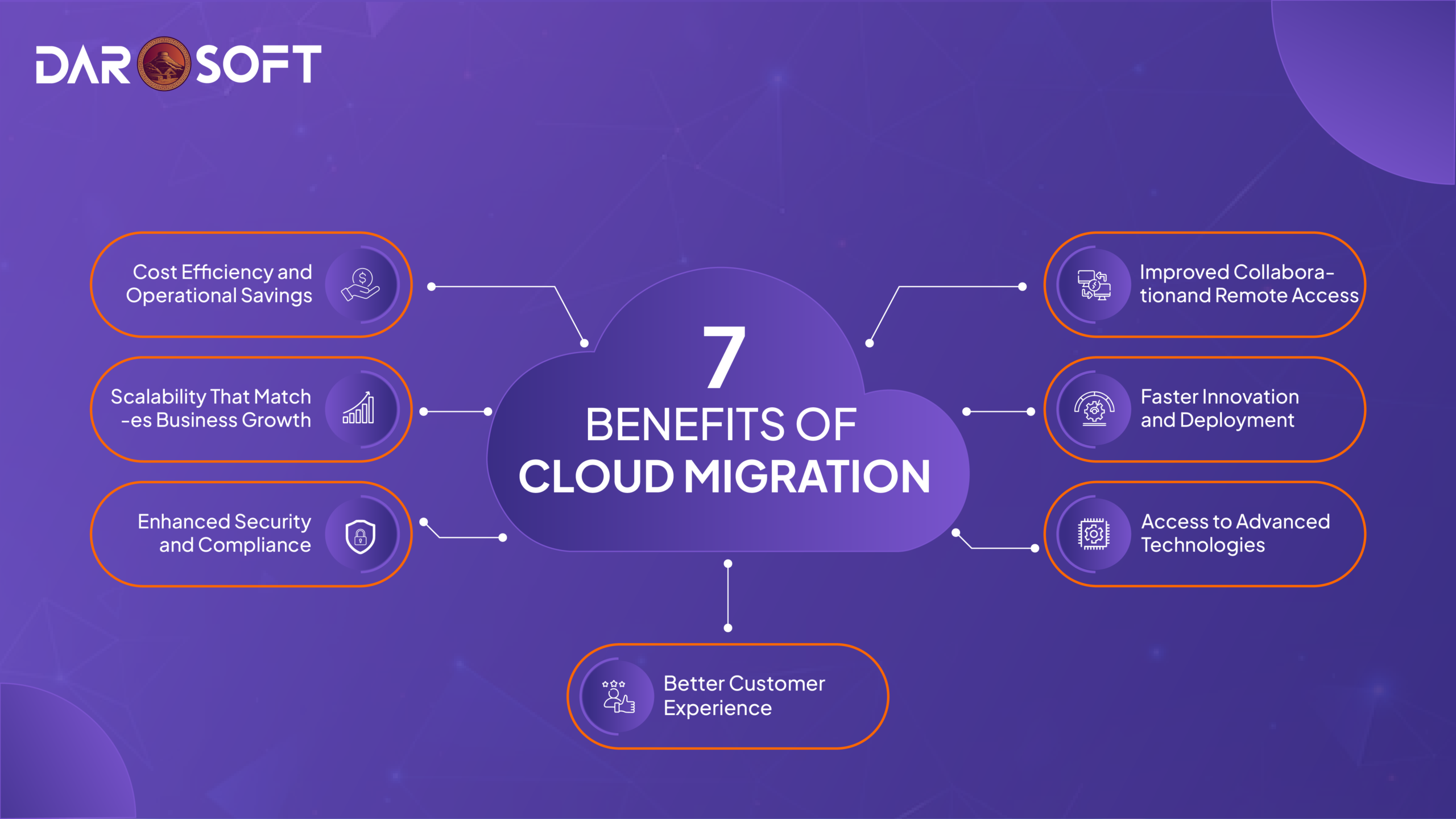
Cost Efficiency and Operational Savings
Reduced Infrastructure Costs
Traditional on-premise systems require a hefty upfront investment in physical servers, storage devices, and networking equipment. In contrast, cloud platforms eliminate the need for such hardware, replacing capital expenses with more manageable operational expenses. This shift allows businesses to avoid overprovisioning and scale resources as needed, rather than investing in excess capacity just in case.Pay-as-You-Go Pricing Models
Cloud providers like AWS, Azure, and Google Cloud offer pay-as-you-go and usage-based pricing, enabling businesses to pay only for what they use. This flexibility is particularly valuable for startups or rapidly evolving companies, as it aligns IT costs directly with business growth and activity levels.Lower Maintenance Overhead
With cloud services, the burden of maintaining, upgrading, and securing infrastructure shifts to the cloud provider. This means less time and fewer internal resources are required for server maintenance, software patching, and hardware replacement. The result? IT teams can focus on strategic initiatives and product innovation, rather than routine system upkeep.
Seamless Resource Scaling (Up/Down)
Cloud platforms offer on-demand scalability, allowing you to increase or decrease computing power, storage, or bandwidth with just a few clicks or automatically using auto-scaling features. This is ideal for growing startups and expanding enterprises that experience variable workloads or are launching new services.Avoid Overprovisioning
traditional IT environments, businesses often overprovision resources to prepare for potential growth or traffic spikes, resulting in wasted capacity and cost. With the cloud, you can provision only what you need, when you need it, reducing waste and optimising spend.Flexibility During Peak Demand
Whether you’re preparing for a product launch, handling seasonal traffic, or experiencing sudden user growth, cloud infrastructure can handle it without a hitch. The ability to scale instantly during high-demand periods ensures consistent performance and uptime, critical for maintaining customer trust and satisfaction.
Data Encryption and Access Control
Leading cloud providers implement end-to-end encryption, both at rest and in transit, to safeguard your data from unauthorised access. In addition, they offer granular access control, allowing businesses to define user roles and permissions to ensure that only the right people can access sensitive systems and data.Compliance with Industry Regulations (GDPR, HIPAA, etc.)
For industries subject to strict regulations, such as healthcare, finance, or e-commerce cloud providers offer tools and certifications to help maintain compliance. From GDPR and HIPAA to ISO 27001 and SOC 2, major platforms ensure their infrastructure meets global and regional data protection standards, saving businesses the complexity of managing compliance independently.Recovery and Backup Capabilities
Built-in with recovery options, including automated backups, multi-region data replication, and quick failover mechanisms. This means your business can recover quickly in the event of data loss, cyberattacks, or system failure, minimising downtime and protecting critical assets.
Cloud-Based Collaboration Tools
Platforms like Google Workspace, Microsoft 365, Slack, and Asana are all built on cloud infrastructure, allowing teams to communicate, co-author documents, manage tasks, and share resources in real time. These tools streamline workflows, reduce communication silos, and foster a more connected workplace.Empowering Remote Teams
With cloud access, employees can log in securely from any device, at any time. Whether it’s a development team working across time zones or sales reps on the road, the cloud ensures consistent, secure access to company resources, helping teams stay productive and aligned regardless of location.Real-Time File Sharing and Updates
Gone are the days of emailing file versions back and forth. Cloud storage services like Google Drive, Dropbox, and OneDrive support real-time file sharing, editing, and version control. So everyone stays on the same page, literally. This reduces errors, improves efficiency, and accelerates project delivery.
Speed-to-Market for New Products
Cloud environments allow teams to launch and test new products or features faster by eliminating delays tied to provisioning hardware or configuring complex environments. This means businesses can iterate quickly, gather user feedback, and refine offerings, reducing time-to-market significantly.DevOps and CI/CD Support
Cloud platforms are ideal for DevOps practices, supporting automation, continuous integration (CI), and continuous delivery (CD). These capabilities help teams deploy updates more frequently and reliably, without service disruption. Tools like AWS CodePipeline, Azure DevOps, and GitHub Actions enable end-to-end deployment workflows natively in the cloud.
Leading cloud providers offer powerful tools to help businesses unlock the value of their data. From machine learning models to predictive analytics and big data processing, these services make it possible to derive insights, automate tasks, and enhance customer experiences, all without building complex systems from scratch.
- Leveraging Cloud-Native Services
Cloud-native services like AWS Lambda (serverless computing), Azure Cognitive Services (AI-powered APIs), and Google Cloud BigQuery (data warehousing) provide scalable and cost-efficient ways to innovate. These services are modular, easy to integrate, and optimized for performance, helping startups and growing companies deploy smarter, faster, and more intelligent applications.
Personalized Services Powered by Cloud Analytics
With built-in analytics and AI tools, cloud platforms enable businesses to gather and analyze customer behavior in real time. This allows for highly personalized experiences from tailored product recommendations to customized marketing campaigns, driving engagement and loyalty.24/7 Uptime and High Availability
Cloud providers offer redundant systems, global data centers, and automatic failover capabilities, ensuring your services are always accessible. This means you can deliver consistent, uninterrupted experiences to customers across time zones and geographies, building trust and boosting satisfaction.Faster Response Times
Cloud infrastructure is designed for high-speed performance and low latency, ensuring that websites, apps, and services load quickly and respond efficiently. This is especially important for customer-facing platforms, where even a few seconds of delay can lead to drop-offs or lost sales.
Challenges to Consider and Solutions
| Challenge | Description | How to Overcome It |
| Migration Complexity | Technical difficulty in moving systems, data, and applications to the cloud. | Conduct a cloud readiness assessment; use a phased migration approach; leverage tools like AWS Migration Hub or Azure Migrate. |
| Vendor Lock-In | Dependency on a single cloud provider limits future flexibility. | Use open standards and containerisation (e.g., Docker, Kubernetes); consider multi-cloud or hybrid strategies. |
| Skills Gap and Training | Internal teams may lack cloud expertise, slowing down implementation. | Invest in team training and certification; hire experienced professionals; work with cloud partners or MSPs. |
| Security & Compliance | Managing data privacy, regulatory compliance, and securing cloud environments. | Choose providers with strong security certifications (e.g., ISO, SOC); use encryption, IAM, and compliance tools. |
| Cost Management | Cloud costs can spiral due to poor planning, unused resources, or overprovisioning. | Use cost monitoring tools; implement budgeting policies; regularly audit and optimize cloud usage. |
Conclusion
For growing startups and scaling enterprises, the cloud offers the flexibility and agility needed to respond quickly to market changes, adopt emerging technologies, and continuously improve products and services. While challenges like migration complexity or vendor lock-in exist, they can be effectively managed with the right planning, tools, and expertise.
By embracing the cloud today, you’re not just upgrading your infrastructure. You’re laying the foundation for long-term growth, resilience, and innovation.