- Written by: Hummaid Naseer
- July 31, 2025
- Categories: Brand, Case Study
Background
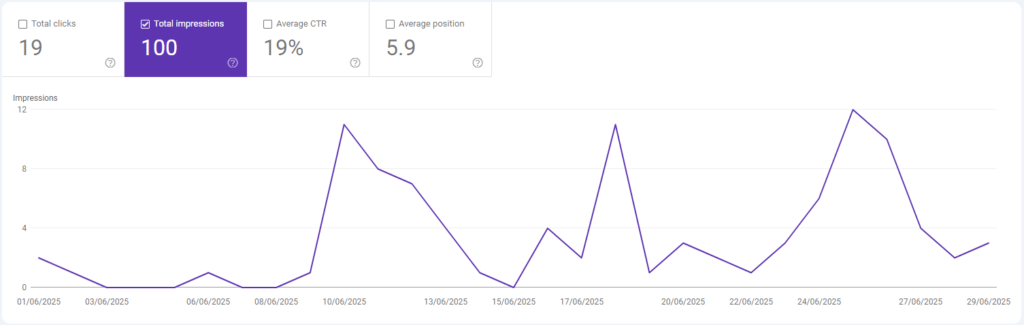
When this client first approached Darosoft, their digital presence was nearly nonexistent. Despite having invested time and resources into creating valuable content, their website was averaging fewer than 100 search impressions per month. For all practical purposes, they were invisible on Google.
The core issue wasn’t the content quality—it was discoverability. Their site had not been properly indexed, and critical technical SEO elements were missing or misconfigured. As a result, search engines couldn’t crawl or understand the pages effectively, leaving the content stranded and underutilized.
In other words, they had built the right message—but on shaky infrastructure. What they needed wasn’t more content, but a stronger, cleaner SEO foundation to give their content a fair shot at visibility.
That’s where Darosoft stepped in.
The Challenge
When we conducted our initial audit, several critical SEO issues immediately surfaced. Issues that were silently holding back the website’s visibility and performance:
Pages Stuck in “Discovered – Currently Not Indexed”
A large portion of the client’s website was visible to Google but not actually being indexed. This meant the pages were found by crawlers but never made it into search results. It’s a common but overlooked technical SEO problem that prevents even high-quality content from ever appearing in front of users.
Zero Organic Keyword Traction
Despite having published content, the site was receiving virtually no organic traffic. There was no meaningful keyword ranking for relevant terms, and no signals of authority or relevance in Google’s eyes. This indicated deeper foundational SEO gaps, not just weak content, but misaligned or missing metadata, improper site structure, and lack of semantic relevance.
Broken Meta Structure, Sitemap, and Crawlability Issues
The website had major technical flaws. Meta titles and descriptions were missing or duplicated, the sitemap was either incomplete or not submitted properly, and internal linking was inconsistent. Googlebot couldn’t efficiently crawl or interpret the site’s hierarchy, resulting in poor indexation and weak visibility across the board.
No Geo-Targeting in Priority Markets
The client had global aspirations, but their visibility in key markets—like the United States, United Kingdom, Australia, and Germany—was almost nonexistent. There was no Geo-targeting strategy in place, no localised content, and no signals to search engines to help them understand the relevance of this content to users in different regions.

Our Approach
To reverse the client’s SEO stagnation and unlock their search potential, we took a methodical, multi-layered approach focused on both foundational technical fixes and strategic visibility enhancements.
Comprehensive SEO Audit
Our first step was to conduct a thorough technical SEO audit using industry-standard tools such as Google Search Console, Screaming Frog, and Ahrefs. The objective was to identify the underlying technical barriers preventing the site from being properly indexed and ranked by search engines.
The audit uncovered several high-impact issues:
Numerous pages flagged as “Discovered – Currently Not Indexed”, indicating that while Google was aware of the pages, it chose not to index them—often due to crawlability or content quality concerns.
Sitemap inconsistencies, including outdated or irrelevant URLs, which were preventing effective crawling and submission.
Broken or duplicate meta tags, leading to missed optimisation opportunities and potential confusion for search engine crawlers.
Missing canonical tags and fragmented internal linking, which diluted page authority and made it harder for search engines to prioritise important content.
Lack of structured data (schema markup), which limited the site’s ability to appear in rich results and communicate content context to search engines.
This audit gave us a clear, prioritised roadmap for addressing the most pressing technical issues and setting a solid foundation for long-term SEO performance.
Fixing the Technical Plumbing
With the root causes clearly mapped out, we focused on strengthening the site’s technical foundation—what we refer to as the “SEO plumbing.” These behind-the-scenes improvements were critical to helping search engines better crawl, understand, and index the content. Our actions included:
- Sitemap Cleanup & Re-submission: We rebuilt the XML sitemap to include only relevant, high-quality pages and ensured proper structure and hierarchy. The cleaned-up sitemap was then resubmitted through Google Search Console to prompt re-crawling and indexing.
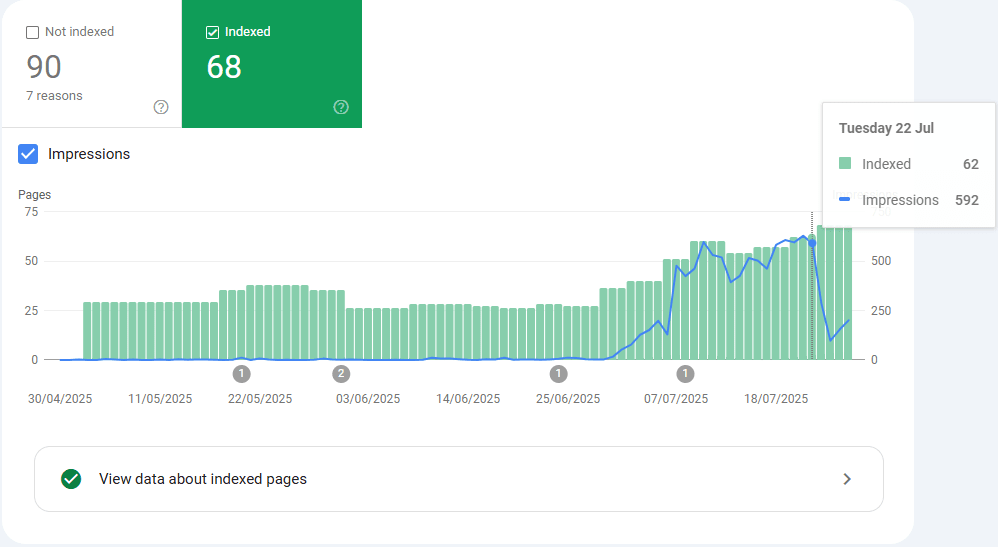
- URL Re-indexing Strategy: For URLs stuck in the “Discovered – Currently Not Indexed” state, we prioritised high-impact pages and manually submitted them via Search Console. We also resolved crawlability issues by improving internal access paths and removing any crawl blocks.
- Meta & Tag Optimisation: We overhauled meta titles and descriptions across key pages, removing duplicates and adding missing tags. Canonical URLs were implemented to prevent duplicate content conflicts, while heading tags were standardised to improve semantic structure.
- Internal Linking Enhancements: We audited and repaired broken internal links, optimised anchor text for better context, and strategically linked to orphan pages. This improved both user navigation and crawler accessibility, strengthening the site’s overall SEO architecture.
These updates formed the backbone of improved crawl efficiency, faster indexing, and ultimately, better visibility in search results.
Geo Optimisation for Priority Markets
To expand the client’s reach beyond general visibility and into targeted international markets, specifically the US, UK, Australia, and Germany. We implemented a strategic geo-optimisation plan. The goal was to make the site more dis-coverable and contextually relevant for search users in each of these key regions.
Our geo-targeting strategy included:
- Localised Schema Markup Implementation: We enriched key pages with structured data such as Organisation, Local-Business, and WebPage schemas, each tailored with localised attributes (like region-specific addresses, currencies, and contact details). This helped search engines better understand the client’s relevance to specific geographies.
- Geo-Specific Keyword Enrichment: We conducted regional keyword research to identify variations in search behaviour, terminology, and intent across each market. These insights were used to optimise high-priority pages with location-aware keywords, improving their ability to rank in geographically filtered search results.
- Hreflang & URL Structure Audit: We reviewed and corrected hreflang tags and ensured language declarations, regional targeting, and canonical were properly configured for international users. This helped reduce duplicate content confusion and served the correct content version based on user location.
- Search Console Geo-Targeting Configuration: Where applicable, we adjusted Geo-targeting settings within Google Search Console to reinforce our intent for regional indexing and visibility. This was particularly impactful for countries like the US and UK, where competition is high and precision targeting matters.
As a result of these combined efforts, the site saw a significant surge in impressions across all target regions, with over 5,000 impressions from the US, 1,000+ from the UK, and strong traction in Australia (400+) and Germany (300+)—all within just a few weeks.
This Geo-optimisation not only improved visibility but also positioned the client for sustainable international growth.

The Results: From Invisible to 10K+ Impressions in 28 Days
Our work delivered dramatic improvements in visibility, indexation, and international reach — all in under a month. Here’s what happened:
-
From Ghosted to Google-Approved
Before engagement, the client’s site was barely visible on search engines — averaging fewer than 100 impressions/month, with most pages stuck in “Discovered – Currently Not Indexed” status. After our technical and strategic optimizations:
Total search impressions jumped from 98 to 10,100+, a 10,200% increase in 28 days.
Total clicks grew proportionally, with high-potential pages beginning to attract qualified traffic.
Previously ignored pages were successfully indexed and surfaced in relevant search results.
Geographic Breakthrough
Geo-targeting efforts yielded impressive international visibility across priority markets:
United States: Impressions surged to 5,000+, with key service-related queries showing up on the first few pages.
United Kingdom: Crossed the 1,000+ impressions mark, previously under 50.
Australia: Gained 400+ impressions from practically zero, reflecting improved local keyword alignment.
Germany: Achieved 300+ impressions, aided by corrected hreflang tags and regional schema enhancements.
This marked the client’s first real presence in international search landscapes, giving them a competitive edge and access to new leads.
-
Keyword Performance Lift
After cleaning metadata, fixing internal linking, and aligning content with searcher intent:
Several priority service pages began ranking for mid and long-tail keywords within 2–3 weeks.
Impression share on high-converting queries increased, particularly in localized and geo-intent search results.
Improved CTR (Click Through Rate) on select landing pages due to refined meta titles and descriptions.
Technical Health Score
Post-implementation, the site’s SEO health rating (based on Ahrefs/Screaming Frog diagnostics) improved from 58% to 91%, indicating:
- Clean sitemap and robots.txt
- Fixed crawl and coverage issues
- Better canonicalization and internal linking
- All major “Discovered – Not Indexed” pages successfully resubmitted and indexed
All Organic, Zero Paid Ads
Importantly, these results were achieved without any paid advertising. Every gain came from:
- A clean technical SEO foundation
- Precise geo-optimization
- Keyword-intent alignment
- Consistent resubmission and indexing strategie

Meet the Team
Behind every successful turnaround is a team that knows what buttons to push and when to push them. Here’s the core crew that powered this project from ghosted to Google glory:
1. Hummaid Naseer: Digital Marketing Manager
The strategist and driving force. Hummaid led the project with clear SEO direction, aligning marketing goals with technical execution, and ensuring that every fix served the bigger picture of growth.
2. Madan Lal: Lead Frontend Engineer
Madan executed the technical groundwork, from resolving crawl issues and sitemap misconfigurations to improving page structure and implementing schema. His precision ensured Google could finally see what the content was saying.
3. Naveed Ahmed: UX/UI Designer
Naveed elevated the user experience, optimized page layouts, and cleaned up design inconsistencies. His enhancements improved not only engagement but also helped reduce bounce rates supporting better SEO performance.
Conclusion:
At its core, SEO success doesn’t come from luck or shortcuts—it comes from strategy, structure, and consistency.
This case proves that even the best content can be buried if the technical foundation is broken. But once we diagnosed the core issues and systematically resolved them from indexation errors to geo-targeting missteps the results followed.
10K+ impressions in 28 days
Srong growth in the US, UK, Australia, and Germany
Better crawlability, faster indexing, and improved engagement
With the right audit, execution, and teamwork, your website can go from invisible to influential just like this one.