- Written by: Darosoft
- June 17, 2025
- Categories: Custom Software & App Development
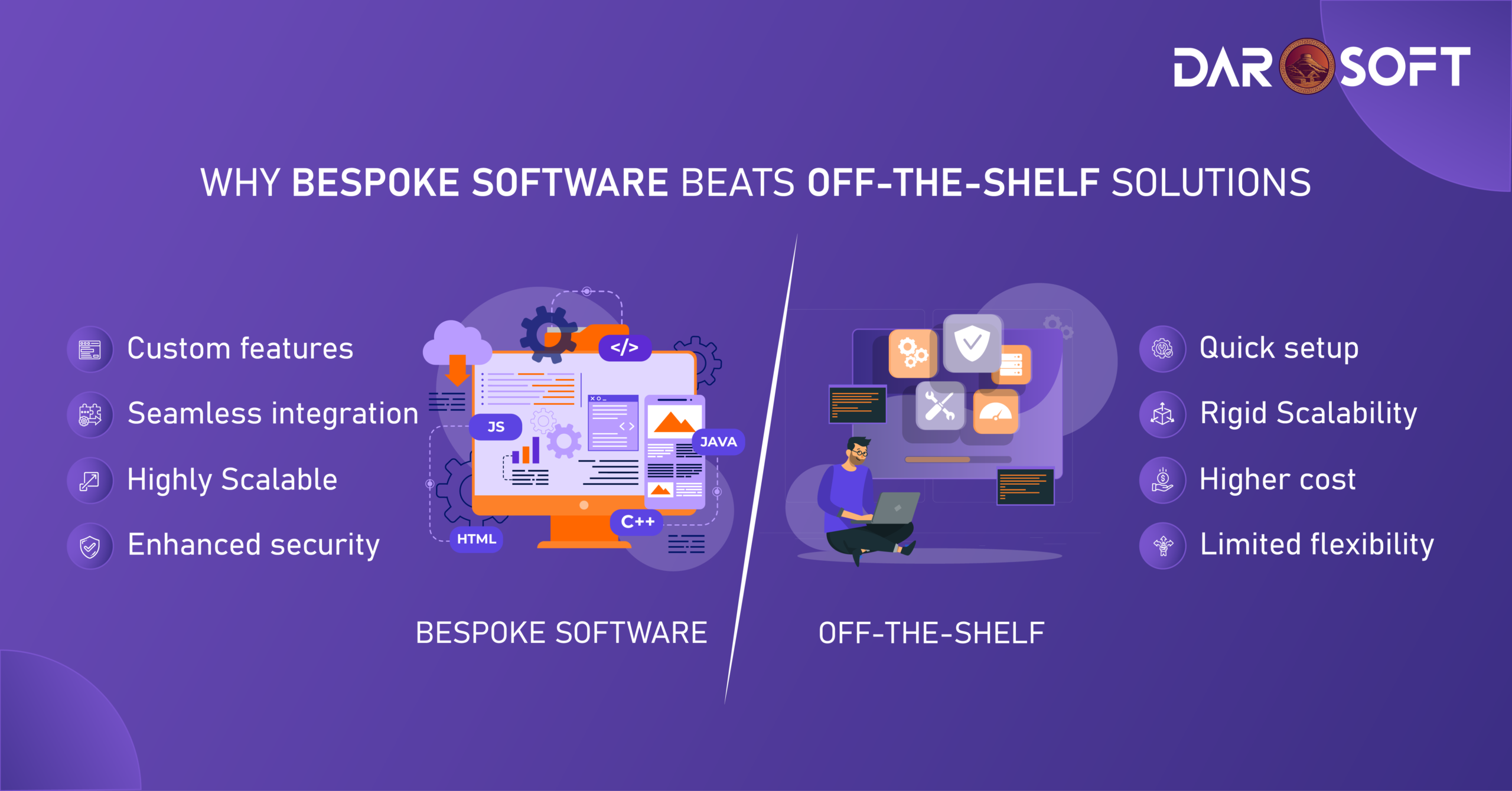
When it comes to choosing the right software for your business, one size rarely fits all. Off-the-shelf solutions may offer quick setup and lower upfront costs, but they often fall short in addressing specific operational needs, workflows, or long-term goals. In contrast, bespoke software is built with your unique challenges in mind, providing greater flexibility, scalability, and a competitive edge. In this blog, we’ll explore why-bespoke-software-beats-off-the-shelf-solutions.
What Is Off-the-Shelf Software?
Off-the-shelf software refers to pre-built, commercially available applications designed to serve a broad range of users with similar needs. These solutions are developed for mass use, often requiring little to no customization. Examples include inventory management tools like Zoho Inventory, accounting software such as QuickBooks, or customer relationship management (CRM) platforms like Salesforce Essentials.
Pros of Off-the-Shelf Software:
- Quick deployment: Ready to use out of the box, with minimal setup.
- Lower initial cost: More affordable upfront compared to custom development.
- Regular updates: Maintained by vendors with ongoing support and feature improvements.
- Community support: A Large user base often means more tutorials, plugins, and third-party tools.
Cons of Off-the-Shelf Software:
- Limited flexibility: May not align perfectly with your specific business processes.
- Scalability issues: Can become inefficient or restrictive as your business grows.
- Integration challenges: Might not work well with your existing systems or tools.
- Recurring costs: Subscription or licensing fees can add up over time.
While off-the-shelf software can be a good fit for some, growing businesses often outpace its capabilities, prompting the need for more tailored solutions.
What Is Bespoke Software?
Bespoke software—also known as bespoke or tailor-made software—is designed and developed specifically for a single organization or unique user requirements, unlike general-purpose off-the-shelf products. Real-world examples include:- Netflix’s recommendation engine and streaming interface, built to analyze viewing preferences and optimize content suggestions.
- Uber’s dispatch and navigation system, expressly created to match riders with drivers efficiently.
- McDonald’s self-service kiosks in Canada, custom-developed to improve order accuracy and customer experience [Read more].
When and why businesses choose bespoke software
Businesses opt for Bespoke software when their specific workflows, users, or growth strategies aren’t well served by generic solutions. Common triggers include:- Unique processes — industries with proprietary methods (e.g., logistics, manufacturing) need custom tools [Read article: targetintegration.com].
- Integration needs to connect with legacy systems or niche platforms seamlessly.
- Strategic differentiation — companies wanting standout user experiences or business models, such as those in SaaS or disruptive tech [reddit link]
- Scalability and future growth — to ensure the system evolves alongside business needs.

Key Differences Between Custom and Off-the-Shelf Solutions
| Feature | Custom Software | Off-the-Shelf Software |
| Flexibility | Highly flexible and tailored to your exact needs | Limited to pre-defined features and configurations |
| Ownership | Full ownership and control over features, updates, and data | Licensed or subscription-based; vendor retains control |
| Cost (Initial vs Long-Term) | Higher upfront cost, but more cost-efficient over time | Lower initial cost, but recurring fees and potential add-ons |
| Scalability | Easily scalable to grow with your business | May require costly upgrades or switching platforms as you grow |
| Integration | Seamless integration with your internal systems and tools | May not integrate well with custom or legacy systems |
| Support & Maintenance | Custom support tailored to your setup; fully manageable | Vendor-provided support; limited control over issue resolution |
Why Custom Software Comes Out on Top
a. Tailored to Your Exact Needs
Custom software is designed specifically around your business processes, ensuring every feature serves a real purpose. You avoid bloated tools and irrelevant functions, resulting in a lean, efficient system that fits your team like a glove.b. Scalability and Future-Proofing
As your business evolves, so can your software. Custom solutions are built with flexibility in mind, making it easier to scale up, adapt to market changes, or incorporate new technologies over time, without starting from scratch.c. Better Integration with Existing Tools
One of the strongest benefits of custom software is seamless integration. Whether you’re using legacy systems, internal APIs, or third-party tools, a tailored solution ensures smooth communication and workflow continuity.d. Enhanced Security
Bespoke applications are less vulnerable to widespread threats, simply because they aren’t widely distributed. With control over security protocols, encryption, and user permissions, you can better protect sensitive data and comply with industry standards.e. Competitive Advantage
Custom software enables you to innovate faster and stand out. With unique features built around your strengths, you gain a strategic edge, offering better user experiences, more efficient operations, and full control over your tech roadmap.Ideal Scenarios for Choosing Custom Software
- Complex or Niche Business Processes Industries like logistics or manufacturing often involve unique workflows that off-the-shelf tools can’t accommodate. For example, Barrett Solutions helped numerous SMEs automate bespoke quoting and inventory workflows tailored to their industry needs [barrettsolutions.co.uk]
- Scaling Startups and Enterprises As organizations grow, they require software that evolves alongside them. A custom ERP or OBGYN EMR system built by Softura demonstrates how tailored solutions can adapt with scaling businesses.[softura.com]
- Multi-Platform Integrations Businesses leveraging both legacy systems and third-party APIs benefit from software that unifies diverse tools under one roof. MichiganLabs reports that custom solutions enable seamless integration where off-the-shelf tools fall short. [michiganlabs.com]
- Data-Sensitive Environments In sectors like healthcare and finance, data handling demands strict security and compliance. Custom systems allow organizations to implement robust permissions, encryption, and industry-specific safeguards. [learn more about bespoke success story]
Custom Software as a Long-Term Investment
In today’s fast-paced, tech-driven business environment, choosing the right software solution isn’t just a technical decision — it’s a strategic one. While off-the-shelf tools may seem convenient and cost-effective at first, they often fall short when your business starts to grow, evolve, or require deeper control and customization.
Custom software, on the other hand, offers long-term value. It’s built specifically for your business — your workflows, your goals, your challenges. It scales with you, integrates seamlessly into your existing systems, and evolves as your market or customers do. Unlike generic tools, custom solutions give you a competitive edge, greater security, and full ownership over your technology.