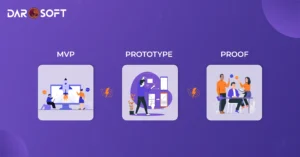
Minimum Viable Product development is a strategic approach to building and launching a product with just enough core features to satisfy early users and gather feedback. It allows startups and product teams to test their ideas in the real world without committing to full-scale development upfront.
This method is especially popular among startups and product teams because it reduces risk, speeds up time to market, and ensures development efforts are aligned with real user needs. By prioritizing essential features and gathering user feedback early, MVP development helps reduce both time and costs, while increasing the chances of building a product people want.
Why Build Using an MVP?
A Minimum Viable Product is designed to:
- Test your core idea with minimal resources.
- Attract early adopters who can provide valuable feedback.
- Validate market demand before committing to a full-featured product.
Many successful startups started with an MVP. For example:
- Airbnb launched a simple website to rent out air mattresses in a living room.
- Dropbox used a demo video to gauge user interest before developing the full product.
These examples show how MVPs can confirm demand before heavy investment.
The Cost Without an MVP
Jumping straight into full-scale development without first validating your idea through an MVP can be risky and costly. Without early user feedback, there’s a high chance of building features that don’t solve real problems or meet market demand. This often leads to wasted resources, both in terms of time and money, as teams may need to rebuild or scrap parts of the product entirely.
Additionally, full-scale development without testing can result in misaligned features, where what’s delivered doesn’t match what users need or want. These missteps can cause significant delays in launch, missed market opportunities, and even product failure. An MVP acts as a reality check, allowing teams to learn quickly, adapt early, and avoid the costly mistakes that come with developing in the dark.
How MVP Development Saves Time
Here’s the content in a clear table format:
| Benefit | Description |
| Faster launch to market | Focuses only on core features, enabling quicker development and early release. |
| Validates product-market fit early | Tests the idea with real users before scaling, reducing risk. |
| Avoids building unnecessary features | Saves time by skipping features that users don’t want or need. |
How MVP Development Saves Money
| Benefit | Description |
| Smaller dev team, lower upfront costs | Requires fewer developers and resources, reducing initial investment. |
| Shorter development cycles | Building only essential features accelerates timelines and reduces expenses. |
| Enables pivoting without major losses | Early validation helps you shift direction before large investments are made. |
| Focuses the budget on core functionality | Prevents wasting money on non-essential or unvalidated features. |
Example of how to build an MVP
- Project: Healthcare appointment booking platform for a startup
- MVP Scope: Included only core features — user sign-up, doctor directory, and appointment booking
- Time to Launch: 6 weeks from concept to live MVP
- Cost Saved: Approximately 40% lower than estimated full-scale development
- Early Feedback: Users requested features like prescription uploads and follow-up reminders
- Outcome:
- MVP helped validate market demand
- Feedback-guided feature roadmap
- Enabled the startup to attract early investors and plan the next development phase efficiently

Essentials to Build an Effective MVP
- Identify the core problem
Understand the main pain point your product aims to solve for users. - Prioritize essential features
Focus only on the minimum set of functionalities needed to deliver value. - Build fast, iterate often
Develop a working version quickly and improve it through continuous iterations. - Gather and act on user feedback
Launch to real users, collect insights, and refine the product based on their needs.
When Should You Choose MVP Development?
Minimum Viable Product development is especially beneficial for startup founders who are in the early stages of building a product. When you’re testing a new idea, it’s risky to invest in full-scale development without knowing whether the market truly wants or needs your solution. An MVP allows startups to validate their core concept, attract early adopters, and gather real-world feedback—all while keeping costs low and development timelines short. This validation can also be critical for securing investor interest or gaining internal buy-in.
For enterprises, MVP development is a strategic way to experiment with innovation. Whether launching a new product line or adding a major feature to an existing system, an MVP helps large organizations test ideas in a controlled, low-risk environment. Instead of committing significant resources upfront, enterprises can gather insights from real users, measure product-market fit, and refine the offering before scaling it organization-wide.
This newly agile method is also ideal for any business operating on a limited budget or with tight deadlines. By focusing only on essential features, teams can avoid overengineering and unnecessary complexity. This lean approach ensures that development efforts are directed toward building something truly valuable, while leaving room to evolve based on actual user behavior. Ultimately, choosing MVP development makes sense whenever speed, efficiency, and learning are key to your product strategy.
FAQs About MVP Development
What does MVP stand for in product development?
MVP stands for Minimum Viable Product, a version of a product with just enough features to satisfy early adopters and gather feedback.
How much does it cost to build an MVP?
MVP development costs vary, but they’re typically 40–60% lower than full-scale builds due to reduced scope and team size.
How long does MVP development take?
Depending on complexity, a typical MVP can take between 4 to 8 weeks to launch.
Why is MVP important for startups?
It enables startups to validate ideas quickly, minimize risk, and save time and money before embarking on full-scale development.
Conclusion
MVP development provides a smart and strategic approach to bringing your product idea to life while minimizing risk. By focusing on core features, it enables faster time to market, lowers upfront costs, and provides early validation from real users, saving both time and money in the long run. Whether you’re a startup testing a new idea or a business looking to innovate efficiently, an MVP approach helps you build, learn, and grow with confidence.