- Written by: Hummaid Naseer
- June 27, 2025
- Categories: Cloud Infrastructure
At the core of every SaaS product lies an architectural decision that directly impacts scalability, security, and cost efficiency known as the tenant model. In SaaS, a “tenant” typically refers to an individual customer or organisation using the platform.
Choosing between single-tenant, multi-tenant, or hybrid models determines how data is isolated, how resources are shared, and how easily the platform can scale. A well-designed tenant model enables startups to onboard users more quickly, reduce operational overhead, and maintain performance as usage increases.
Multi-Tenant Architecture
Multi-tenant architecture is a software design pattern where a single instance of an application serves multiple customers (tenants), with each tenant’s data securely separated. Instead of deploying separate environments for each client (as in single-tenant models), multi-tenancy allows all users to share the same infrastructure, codebase, and database, while maintaining logical data isolation through identifiers, schemas, or row-level security.
This approach is ideal for SaaS businesses because it enables:
Lower infrastructure costs (shared resources)
Simplified deployment and updates (one version to maintain)
Faster scaling (onboarding new tenants with minimal setup)
What Is Single-Tenant Architecture?
Single-tenant architecture is a software deployment model where each customer (tenant) gets a dedicated instance of the application and supporting infrastructure. This means their data, resources, and configurations are completely isolated from other customers.
This model offers key advantages:
Greater security and data isolation
High customisation per client
Simplified compliance for regulated industries
However, it comes with trade-offs: higher infrastructure costs, more complex maintenance, and slower scalability compared to multi-tenancy. Single tenancy is often chosen by enterprises with strict security, performance, or customisation requirements.
Technical Comparison
|
Category |
Single-Tenant Architecture |
Multi-Tenant Architecture |
|
Data Isolation |
Physically or logically isolated per customer (separate DB/instance) |
Shared database with logical separation (e.g., tenant ID, schema) |
|
Deployment Complexity |
High – each customer has a dedicated deployment |
Low – single deployment for all tenants |
|
Resource Allocation |
Dedicated resources per tenant (compute, storage, networking) |
Shared resources across tenants; pooled and managed centrally |
|
Performance Tuning |
Can be tailored per tenant |
Generalised; may require throttling, caching, and load balancing |
|
Customisation |
High – easier to implement tenant-specific features or configs |
Limited – one codebase and shared environment |
|
Scalability |
Slower and resource-intensive |
Fast and efficient; scales horizontally |
|
Security & Compliance |
Stronger isolation; often preferred for strict regulatory environments |
Requires strict access controls and monitoring |
|
Maintenance & Updates |
Per-tenant upgrades; version drift possible |
Centralised updates; uniform platform version |
|
Cost Efficiency |
Higher infrastructure and maintenance costs per tenant |
Lower cost per tenant; higher operational efficiency |

Security and Compliance
Tenant Isolation = Security Confidence
Single-tenant setups: Each customer has a dedicated environment, making data breaches or configuration errors less likely to affect other clients. This physical or logical isolation aligns well with high-trust environments such as finance, healthcare, and government.
Multi-tenant systems: multiple customers share infrastructure, meaning a vulnerability in one tenant’s configuration if not properly contained, can pose a shared risk. This requires more sophisticated identity, access control, data segregation, and monitoring mechanisms.
Regulatory Frameworks: GDPR, HIPAA, SOC 2
Single-Tenant: Easier to meet GDPR, HIPAA, and SOC 2 requirements, since data residency, encryption, audit logging, and incident response can be tailored per client.
Multi-Tenant: Achieving compliance is possible but requires centralised security governance, strong encryption-at-rest and in-transit, and detailed tenant-level logging. It demands multi-layered security design and rigorous third-party audits.
Scalability and Maintenance
Upgrade & Version Management
Single-Tenant: Each tenant may run on a different version, requiring individual upgrades, QA, and roll-out coordination. This can lead to version drift, higher DevOps overhead, and inconsistent feature delivery.
Multi-Tenant: Centralised code-base means one upgrade applies to all tenants, drastically reducing effort. Testing and CI/CD are streamlined, with fewer moving parts.
Scaling Behaviour
Single-Tenant: Scaling must be done per tenant, often requiring isolated infrastructure for each. This results in slower and more expensive horizontal scaling.
Multi-Tenant: Shared infrastructure allows for economies of scale as usage grows, resources can be pooled and scaled more efficiently using auto-scaling and container orchestration.
DevOps & Maintenance Overhead
Single-Tenant: More complex to monitor, back up, and troubleshoot due to fragmented environments. DevOps teams need tenant-specific playbooks, dashboards, and recovery processes.
Multi-Tenant: Centralised monitoring, logging, and management lead to a lower operational burden. Incident response and performance optimisation can be applied platform-wide.
Customisation vs. Standardisation
When Customisation Is Critical
In single-tenant architecture, each client operates in their isolated environment, making it far easier to:
Support custom workflows or business logic
Deploy client-specific integrations with legacy systems
Apply unique branding, configurations, or compliance rules
This makes single-tenancy ideal for:
Large enterprises with complex onboarding needs
Regulated sectors requiring tailored compliance
B2B SaaS with high-touch, high-value contracts
When Standardisation Drives Scale
In multi-tenant architecture, all customers share the same codebase and infrastructure. Customisation is limited by design to preserve:
Platform stability
Faster feature delivery
Easier support and QA
Customisation in this model typically happens via:
Configurable settings
Feature toggles
Role-based access control
Themeing and branding APIs
This works well for:
SMB-focused SaaS
Self-serve or product-led growth platforms
Startups that prioritise scale and simplicity over bespoke features
Hybrid Approaches
Some SaaS platforms adopt a hybrid model, offering core services on a multi-tenant foundation while layering optional single-tenant environments or custom modules for premium clients. This approach balances operational efficiency with strategic flexibility.
Cost Considerations: Cap-Ex, Op-Ex, and Unit Economics
Model | Cost per User | Revenue per User | Margin Potential | Scaling Efficiency |
Multi-Tenant | Low | Medium | High | High |
Single-Tenant | High | High | Medium | Low |
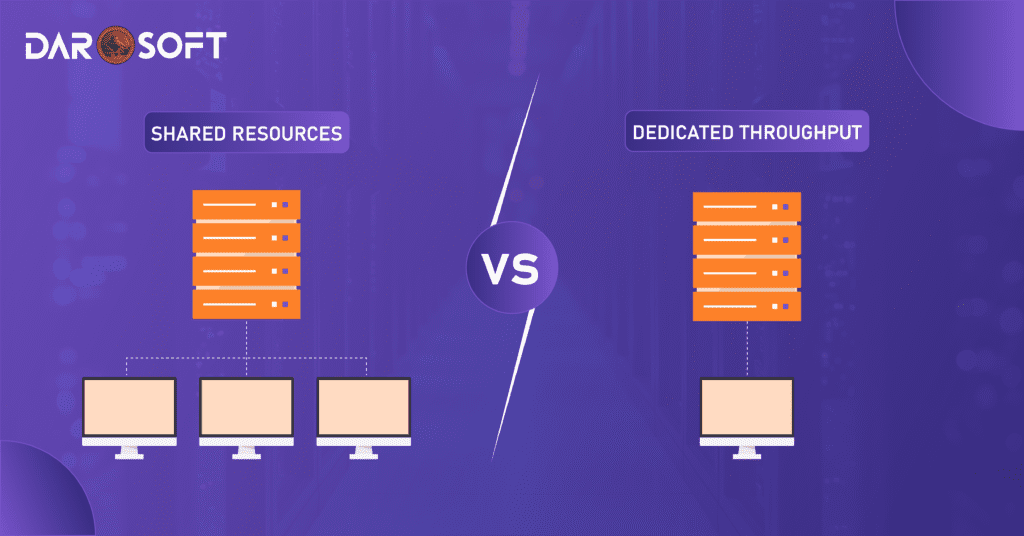
Shared Resources vs. Dedicated Throughput
Multi-Tenant: Efficient but Variable
In a multi-tenant environment, all customers share compute, storage, and networking resources. While this approach maximises utilisation and reduces costs, it introduces potential for:
Resource contention (a.k.a. “noisy neighbour” problems)
Inconsistent performance during usage spikes
Throttling limits to protect overall system stability
Single-Tenant: Predictable and Isolated
With single tenancy, each customer has dedicated infrastructure. This guarantees:
Consistent throughput and low-latency response times
No risk of interference from other clients’ workloads
Greater flexibility in performance tuning, caching, or resource allocation
Hybrid and Poly-Tenant Architectures
Modern SaaS platforms are no longer forced to choose strictly between single-tenant and multi-tenant models. Instead, many adopt hybrid or poly-tenant architectures, offering a middle ground that balances scalability, cost-efficiency, and customisation.
1. Shareded Multi-Tenancy
In this model, tenants are grouped into isolated clusters or database shards. Each shard serves multiple customers but limits the blast radius of any performance or security issue. Shareding can be based on region, customer size, or risk profile, allowing both scale and fault isolation.
Benefits:
Improved performance stability
Easier compliance with data residency laws
Gradual scalability without a full multi-tenant rewrite
2. Tenant Pools (Pooled Single-Tenancy)
Here, tenants are assigned to pre-provisioned, semi-isolated environments like container groups or Kubernetes namespaces. It’s essentially single-tenant behaviour at a lower cost by pooling similar clients onto shared but loosely isolated resources.
Benefits:
Controlled resource allocation
Better support for premium tiers
Easier per-client customisations with lower DevOps overhead
3. VPC-Isolated SaaS
In this model, especially common with enterprise SaaS, each customer’s environment runs in a dedicated virtual private cloud (VPC), even if it shares the underlying infrastructure. This offers network-level isolation without fully duplicating infrastructure.
Benefits:
Strong data isolation and security posture
Fits compliance-heavy industries (HIPAA, FedRAMP, etc.)
Enables a mix of shared services with private execution layers
Why Hybrid Works
Hybrid and poly-tenant models give SaaS providers architectural agility:
High-scale, low-touch clients go on shared infrastructure
High-paying, regulated clients get isolated or semi-isolated instances
Different tiers get different architectural footprints, maximising both cost-efficiency and customer satisfaction
These models offer a smart path for growing SaaS businesses that want the flexibility of single-tenancy with the efficiency of multi-tenancy.
Choosing the right Model
Choosing between single-tenant, multi-tenant, or a hybrid architecture depends on who you’re serving, what they require, and how you plan to scale. Use this matrix to align your architecture with your strategic priorities:
Criteria | Single-Tenant | Multi-Tenant | Hybrid / Poly-Tenant |
Target Customer | Enterprise, high-touch clients | SMBs, startups, self-serve users | Mixed: SMBs + select enterprise |
Security Requirements | High (HIPAA, SOC 2, GDPR, financial compliance) | Moderate (standard encryption and isolation) | Flexible – VPC or sharded isolation per need |
Customisation Needs | High – client-specific features, integrations, branding | Low – standardised product across users | Medium – limited customisation via config or modules |
Cost Sensitivity | Low – customers can pay premium pricing | High–cost efficiency per user is critical | Balanced – optimise shared resources with selective isolation |
Go-to-Market Strategy | Direct sales, high-value contracts, and long sales cycles | Product-led growth, trials, and low-friction onboarding | Tiered pricing, mix of PLG and enterprise sales |
Conclusion
Choosing between single-tenant, multi-tenant, or hybrid architecture isn’t just a technical decision; it’s a strategic commitment that directly impacts scalability, cost structure, security posture, and customer experience. While immediate needs like faster time-to-market or onboarding a key client may push one model over another, your architecture should ultimately align with your long-term product vision.
If your roadmap includes global scale, high automation, and a broad customer base, multi-tenancy or hybrid models offer the operational leverage you’ll need. If deep customisation, high-touch service, or strict compliance define your market, a single-tenant or poly-tenant approach may serve you better. The right architecture doesn’t just support your product; it shapes how fast, securely, and profitably it can grow.