- Written by: Hummaid Naseer
- August 19, 2025
- Categories: Services & Products
Lean Warehouse Management utilises Lean principles to optimise warehouse operations by eliminating waste, enhancing process flow, and maximizing value. It focuses on reducing inefficiencies, like excess inventory, unnecessary movement, and delays. While increasing speed, accuracy, and customer satisfaction. Through tools like 5S, Kanban, and continuous improvement, Lean helps warehouses operate smarter, faster, and more cost-effectively.
Signs Your Warehouse Is in Chaos
A chaotic warehouse doesn’t just hurt efficiency; it impacts customer satisfaction, employee morale, and profitability. Below are the most common indicators that your warehouse operations may be spiraling out of control:
Excess Inventory Piling Up
You’re constantly overstocked with items that aren’t moving.
Inventory levels are based on guesswork, not actual demand.
Products expire, get damaged, or go obsolete before being sold.
This ties up cash flow and limits space for fast-moving items.
Misplaced or Lost Stock
Staff frequently can’t find items, even though they’re marked as “in stock.”
Items are shelved in the wrong locations or are not recorded properly.
Stock discrepancies between physical and system records are common.
This leads to mis-picks, backorders, and frustrated customers.
Long Picking and Fulfillment Times
Workers spend more time searching than picking.
Orders take too long to fulfill due to inefficient layout or batch picking errors.
Bottlenecks occur in packing or shipping areas during peak times.
This increases labor costs and delays order delivery.
Constant Firefighting
Every day brings urgent issues: late shipments, missing items, or angry calls.
Employees are reacting to problems instead of following clear processes.
There’s no time for planning or improvements because you’re always in crisis mode.
This creates a stressful environment and short-term thinking.
Poor Space Utilisation
Aisles are cluttered, and products block walkways or dock doors.
Racking isn’t optimised for the size or turnover rate of SKUs.
Temporary storage areas become permanent dumping grounds.
This reduces productivity and increases the risk of accidents.
High Error Rates in Orders
Customers often receive the wrong item, quantity, or damaged goods.
Returns and complaints are on the rise.
You lack quality checks or rely too heavily on manual entry.
This damages your brand and customer loyalty.
Lack of Visibility and Data
Managers can’t quickly answer questions like “What’s our most picked item?”
Reports are outdated, incomplete, or manually compiled.
You don’t have real-time inventory or performance tracking.
This limits your ability to make informed decisions or scale operations.
5S Methodology: Clean House, Clear Mind
A cluttered warehouse leads to wasted time, errors, and inefficiency. The Lean 5S system offers a simple, powerful way to bring order and clarity to your operations. Here’s how each step works in a warehouse setting:
Sort (Seiri) – Keep Only What’s Needed
Goal: Eliminate unnecessary items from the workspace.
Warehouse Example:
Remove obsolete inventory, broken tools, or unused equipment.
Tag and dispose of anything that doesn’t support current operations.
Result: Less clutter, faster access to essentials.
Set in Order (Seiton) – A Place for Everything
Goal: Organise tools, materials, and inventory for easy access.
Warehouse Example:
Designate clear bin locations for each SKU.
Label shelves, aisles, and workstations for fast retrieval.
Store frequently picked items near packing stations.
Result: Reduced search time and movement.
Shine (Seiso) – Clean and Inspect
Goal: Maintain a clean, safe, and functional environment.
Warehouse Example:
Daily sweeping, equipment cleaning, and checking for spills or damage.
Encourage “clean as you go” habits during shifts.
Result: Fewer hasards, smoother equipment use, better morale.
Standardise (Seiketsu) – Create Consistent Practices
Goal: Establish routines and guidelines for the first three S’s.
Warehouse Example:
Develop visual SOPs (standard operating procedures).
Use checklists for restocking, cleaning, and inspection.
Apply color coding for zones, tools, and materials.
Result: Everyone follows the same best practices.
Sustain (Shitsuke) – Keep It Going
Goal: Make 5S a habit, not a one-time event.
Warehouse Example:
Conduct regular audits and team reviews.
Celebrate improvements and hold staff accountable.
Provide training and ownership of work areas.
Result: Long-term discipline and continuous improvement.
Why 5S Works in Warehousing
When implemented correctly, 5S transforms warehouse operations by:
Boosting productivity
Improving safety
Enhancing accuracy
Reducing downtime
Empowering workers
A clean house does lead to a clear mind and a more efficient warehouse.
Streamline Movement with Value Stream Mapping
Value Stream Mapping (VSM) is a Lean tool that helps you visually map out every step in your warehouse processes, from receiving to shipping, to uncover inefficiencies and streamline flow.
What Is Value Stream Mapping?
It’s a visual diagram that shows how materials and information move through your warehouse. It highlights:
Every task involved in fulfilling an order
Who does what, where, and when
The time each step takes
Where delays, handoffs, or redundancies occur
How It Applies to Warehousing
Typical value streams include:
Receiving
Putaway
Storage
Picking
Packing
Shipping
With VSM, you can:
Spot bottlenecks (e.g., long picking queues)
Eliminate non-value-added steps (e.g., double handling of inventory)
Reduce wait times (e.g., delays between pick and pack)
Improve information flow (e.g., clearer task assignments or real-time updates)
Benefits of Using VSM in the Warehouse
Faster fulfillment
Lower labor and transport costs
Greater accuracy
Better visibility and control
Reduce Waste (Muda) in Every Operation
In Lean thinking, “Muda” refers to any activity that consumes resources but adds no value. Warehouses are full of hidden waste that slows operations, increases costs, and reduces customer satisfaction. Lean identifies 8 types of waste, and eliminating them is key to a leaner, more efficient warehouse.
The 8 Types of Waste in Warehousing & How to Eliminate Them
Defects
Examples:
Mis-picks, mislabels, incorrect shipments
Damaged goods from poor handling
How to Fix It:
Use barcode scanning and quality checks
Train staff on proper picking, packing, and handling
Conduct root cause analysis for recurring errors
Overproduction
Examples:
Stocking more items than needed
Creating custom kits no one ordered yet
How to Fix It:
Use real-time demand forecasting
Switch to a pull-based inventory system like Kanban
Set reorder points based on usage data
Waiting
Examples:
Staff are idle due to system outages or missing stock
Orders waiting in staging before picking
How to Fix It:
Balance workloads between zones
Streamline order flows with automation
Keep backup systems for tech outages
Non-Utilised Talent
Examples:
Skilled workers doing repetitive manual tasks
No input from employees on process improvements
How to Fix It:
Cross-train employees
Involve staff in Kaizen and problem-solving meetings
Automate low-skill tasks to free up talent
Transportation
Examples:
Unnecessary movement of goods between zones
Items stored far from the picking or packing areas
How to Fix It:
Redesign layout based on item velocity
The group frequently picked SKUs closer to the packing stations
Minimise double-handling of items
Inventory
Examples:
Excess stock blocking aisles or going obsolete
Overstocked slow-movers wasting shelf space
How to Fix It:
Regularly review and right-size inventory levels
Adopt just-in-time (JIT) inventory practices
Monitor SKU performance to adjust reorder policies
Motion
Examples:
Workers walking long distances between tasks
Reaching, bending, or climbing to access stock
How to Fix It:
Optimise warehouse layout and bin locations
Use ergonomic tools and mobile workstations
Implement pick-to-light or voice-picking systems
Extra Processing
Examples:
Double-checking orders manually
Repacking or relabel due to system issues
How to Fix It:
Standardise workflows
Eliminate unnecessary checks through automation
Maintain clean, updated data in your WMS

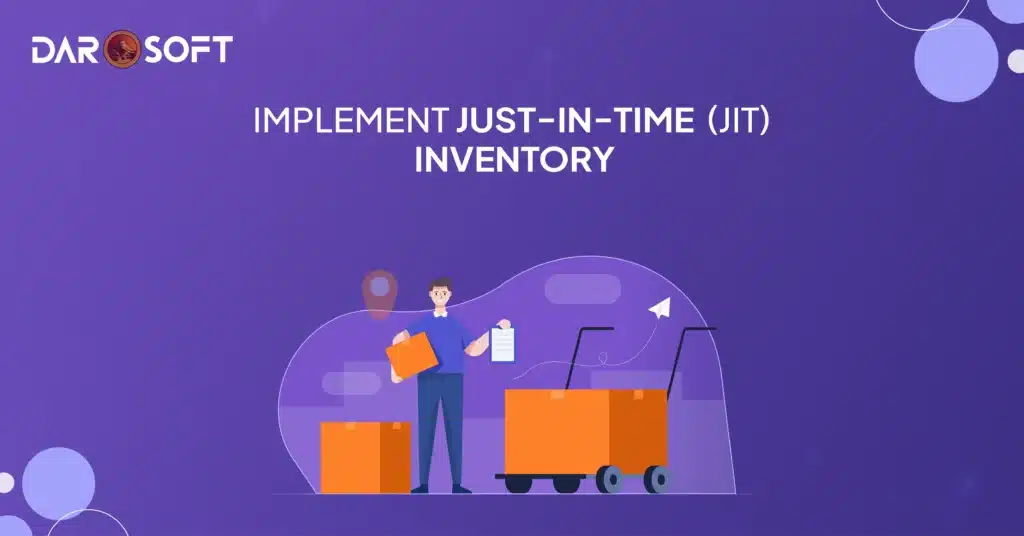
Implement Just-in-Time (JIT) Inventory
Just-in-Time (JIT) inventory is a ware house strategy that focuses on keeping just enough stock on hand to meet demand no more, no less. The goal is to reduce excess inventory, free up warehouse space, and lower holding costs without running out of the products your customers need.
Striking the Right Balance
JIT isn’t about cutting inventory to the bone, it’s about precision. You’re matching incoming supply closely with outgoing demand to minimise waste while maintaining service levels.
Benefits of JIT Inventory
Lower Storage Costs
Less stock means smaller warehouse space and reduced overhead.Less Waste
Minimised risk of damage, obsolescence, or expiration.Improved Cash Flow
Money isn’t tied up in stagnant inventory.Greater Agility
You can adapt more quickly to changes in demand or product trends.
How to Make JIT Work in Your Warehouse
Accurate Demand Forecasting
Use sales history, seasonality, and predictive analytics to anticipate needs.
Align purchasing with real-time demand data.
Strong Supplier Relationships
Work closely with reliable vendors who can deliver quickly and consistently.
Consider local suppliers to reduce lead times.
Lean Inventory Controls
Set smart reorder points and safety stock levels.
Implement automated alerts for restocking.
Efficient Warehouse Processes
Streamline receiving, put away, and picking to avoid delays.
Use cross-docking for fast-moving SKUs to skip storage altogether.
Real-Time Visibility
Integrate your WMS with sales and procurement systems.
Monitor stock levels live to make fast, informed decisions.
Watch Out For:
Supply Chain Disruptions
JIT leaves little room for error any supplier delay can halt operations.Sudden Demand Spikes
If you can’t replenish quickly, you risk stock outs and missed sales.Poor Communication
A JIT system breaks down without seamless coordination between departments and vendors.
Standardise Tasks to Improve Repeatability
Consistency is key to warehouse efficiency. By standardising tasks through Standard Operating Procedures (SOPs) and repeatable workflows, you reduce confusion, training time, and costly errors.
What Is Task Standardisation?
Standardisation means creating clear, step-by-step instructions for common tasks like receiving, picking, packing, and inventory counting so they’re performed the same way every time, regardless of who’s doing them.
Why It Matters
Reduces Mistakes
When everyone follows the same process, there’s less room for variation or error.Simplifies Training
New hires can learn faster with documented steps and visual aids.Boosts Efficiency
Streamlined tasks cut out unnecessary steps and wasted motion.Improves Accountability
It’s easier to spot and correct deviations from the standard.Enables Continuous Improvement
You can fine-tune your process because there’s a consistent baseline.
Example in the Warehouse
Task: Order Picking
Step 1: Scan order sheet or use handheld device
Step 2: Follow the pre-defined route by pick sequence
Step 3: Scan each item and place it in the labeled tote
Step 4: Verify order before sending to packing
With this SOP in place, every picker works the same way, fast, accurate, and traceable.
How to Standardise Effectively
Document the Best Practice
Involve front line workers to capture how top performers do the task.Use Visual Aids
Add photos, diagrams, or videos to make SOPs more intuitive.Keep It Simple
Use clear, concise language and avoid jargon.Train & Reinforce
Use SOPs during on boarding and regular refresher sessions.Review & Improve
Regularly audit processes and update SOPs when changes are made.
Empower Employees Through Continuous Improvement (Kaizen)
Kaizen: Japanese for “continuous improvement” is a core Lean principle that encourages everyone in the organisation to contribute to making things better, every day. In a warehouse, this means empowering floor staff to identify small problems, suggest solutions, and help refine processes over time.
What Is Kaizen?
Kaizen focuses on small, incremental improvements that compound over time. Instead of waiting for major overhauls, teams make daily adjustments that reduce waste, improve efficiency, and boost morale.
Why It Starts on the Warehouse Floor
Your frontline staff:
Know where time is wasted
Experience inefficiencies firsthand
Often have simple, effective solutions but may not be asked
When you give them a voice, you unlock powerful insights.
Kaizen in Action: Simple Examples
A picker suggests re-organising a bin location to reduce walking time
A packer recommends a better label placement to speed up scanning
A receiver identifies a faster way to verify incoming goods
How to Build a Kaizen Culture
Encourage Daily Feedback
Create a simple method for staff to share ideas, whiteboards, suggestion cards, or quick meetings.Act Quickly on Small Wins
Implement good suggestions fast. Momentum builds when employees see their input make a difference.Celebrate Contributions
Recognise individuals and teams who suggest improvements big or small.Train Everyone on Problem-Solving
Teach basic tools like the 5 Whys or PDCA (Plan-Do-Check-Act) so staff can think analytically.Lead by Example
Supervisors should model a continuous improvement mindset and support employee ideas.
The Big Payoff
Kaizen creates a workforce that is engaged, proactive, and invested in operational success. Over time, hundreds of micro-improvements add up to:
Faster processes
Lower costs
Fewer errors
A more motivated team
Small steps, taken together, drive massive transformation.
Use Kanban Systems to Control Stock Flow
Kanban is a simple yet powerful Lean tool that helps manage inventory flow by using visual signals physical cards, boards, or digital alerts, to trigger restocking only when it’s needed. The goal is to avoid overproduction, reduce excess inventory, and ensure products move smoothly through your warehouse.
What Is a Kanban System?
Kanban (Japanese for “signboard” or “visual signal”) is a pull-based inventory system, meaning stock is replenished in response to actual demand, not forecasts. When a product reaches a certain threshold, the Kanban signal prompts replenishment.
How It Works in a Warehouse
Two-Bin System (Physical Kanban):
Items are stored in two bins.
When the first bin is empty, it triggers restocking while the second bin is used.
Kanban Cards/Tags:
Cards are attached to inventory.
When a unit is used or moved, the card is sent to procurement or production as a signal to reorder.
Digital Kanban (WMS/ERP-Based):
Automated alerts are sent when stock hits reorder levels.
Real-time dashboards show stock status visually.
Benefits of Using Kanban
Prevents Overstocking
Replenishment is based on actual use, not guesses.Reduces Stockouts
Timely restocking avoids running out of key items.Improves Inventory Visibility
Clear visual cues show where inventory stands at all times.Simplifies Workflow
Workers know exactly when and how much to reorder, reducing planning complexity.
Best Practices for Kanban in Warehousing
Set Reorder Points Wisely
Base them on usage rates, lead times, and safety stock levels.Standardise Kanban Cards or Alerts
Use consistent formats with item name, quantity, location, and supplier.Train Staff to Respond Promptly
Everyone should know how to recognise and act on Kanban signals.Review and Adjust Regularly
Fine-tune thresholds as demand and supplier performance evolve.
Measure, Improve, Repeat
Lean isn’t a one-time fix; It’s a continuous cycle of measuring performance, identifying gaps, and improving processes. In a warehouse, this ongoing loop keeps operations efficient, agile, and aligned with real-world demands.
Step 1: Measure What Matters
To improve, you must first track the right metrics. Focus on KPIs that reflect both performance and waste:
Order Accuracy Rate
Pick & Pack Cycle Times
Inventory Turnover
Stockout Frequency
Dock-to-Stock Time
Space Utilisation
Labor Productivity
These metrics give you a data-driven view of what’s working and what’s not.
Step 2: Audit and Analyse
Regular audits and process reviews help you spot hidden inefficiencies. Use tools like:
Gemba Walks – Observe work on the floor to identify friction points
Root Cause Analysis – Dig into the “why” behind recurring issues
Value Stream Mapping – Visualise your workflows to find bottlenecks
5S Audits – Ensure workplace organisation standards are sustained
Audits aren’t just about catching mistakes; they’re about learning and improving.
Step 3: Implement & Improve
Once issues are identified, take action:
Redesign workflows to reduce motion or waiting
Automate repetitive tasks
Update SOPs for consistency
Reconfigure storage based on item velocity
Involve your team, especially frontline staff, in crafting solutions. Small changes add up fast.
Step 4: Repeat the Cycle
Continuous improvement is just that, continuous. Revisit your metrics and processes regularly. Celebrate gains, but always ask:
“What can we do even better?”
Make improvement part of your warehouse culture, not just a quarterly goal.
Conclusion
Adopting Lean warehouse management isn’t about flipping a switch; it’s about committing to continuous, step-by-step improvement. You don’t need to transform everything overnight. Start small: reorganise a picking zone, implement a 5S routine, or create a basic Kanban system. Each improvement builds momentum.
Celebrate those small wins. Every reduced error, faster pick time, and cleaner workspace is a step from chaos toward control.
Lean isn’t just a method, it’s a mindset. And with steady progress, engaged teams, and a focus on value, your warehouse will become leaner, smarter, and more resilient every day.