- Written by: Hummaid Naseer
- October 9, 2025
- Categories: Cloud Infrastructure
The explosion of IoT devices, sensors, and connected systems is generating an unprecedented volume of data every second. From smart factories and autonomous vehicles to healthcare wearables and retail systems, this data is crucial for informed decision-making and operational efficiency.
However, traditional cloud computing models are beginning to show their limitations. Sending all this information to centralized data centers creates challenges such as:
Latency: Delays that make real-time decision-making difficult.
Bandwidth strain: Massive amounts of data clog networks.
Reliability issues: Dependence on constant high-speed connectivity.
This is where edge computing comes in. Instead of relying solely on distant cloud servers, edge computing processes data closer to where it is generated, at the “edge” of the network. By doing so, it reduces latency, eases bandwidth demands, and enables faster, more reliable insights.
What Is Cloud Computing? (Quick Refresher)
Cloud computing has been one of the biggest enablers of digital transformation in the last two decades. Instead of buying, managing, and maintaining expensive on-premises servers, businesses can now access computing resources on demand from remote data centers operated by providers like AWS, Microsoft Azure, or Google Cloud.
At its simplest, cloud computing means delivering IT resources, servers, storage, databases, networking, analytics, and even AI, over the internet. These resources are hosted in centralised data centers and made available to users worldwide.
Key Benefits of Cloud Computing
Scalability
Businesses can instantly scale up during peak demand (e.g., holiday e-commerce traffic) and scale down when demand drops.
This flexibility prevents over-investment in infrastructure that might remain unused most of the year.
Cost-Efficiency
The cloud follows a pay-as-you-go model, eliminating heavy upfront costs for hardware.
Maintenance, upgrades, and energy costs are handled by the provider, reducing operational overhead.
Global Access and Collaboration
Data and applications hosted in the cloud are accessible from anywhere with an internet connection.
This supports remote work, global teams, and 24/7 service availability.
Rapid Innovation
Cloud providers continuously roll out new services, AI models, analytics tools, and cybersecurity solutions that businesses can adopt instantly without building from scratch.
Limitations of Cloud Computing
Despite its strengths, cloud computing has inherent constraints, especially in data-heavy, real-time environments:
Latency Issues
When data must travel long distances to centralized data centers, even milliseconds of delay can be critical.
This is a major concern for applications like autonomous vehicles, robotics, or real-time healthcare monitoring.
Dependence on Internet Connectivity
Cloud systems rely heavily on stable, high-speed internet connections.
In areas with poor connectivity, cloud-based services may become unreliable or completely inaccessible.
Bandwidth Strain
Sending vast amounts of raw data to the cloud consumes significant bandwidth, which can be costly and inefficient.
Data Privacy and Compliance Risks
Sensitive information stored in off-site data centers may raise concerns about data sovereignty (who controls the data and where it’s stored).
Meeting strict regulatory standards like GDPR or HIPAA can be challenging if data crosses borders.
What Is Edge Computing?
Edge computing is a distributed computing paradigm where data processing and analysis take place as close as possible to the source of data generation—whether that’s a sensor, a device, a machine, or a local server. Instead of sending all raw data to a centralized cloud for processing, edge computing allows devices to handle much of the workload locally at the “edge” of the network.
How It Works
Edge devices (e.g., smart sensors, industrial machines, autonomous vehicles, drones, cameras) generate vast amounts of data.
Local processing units (e.g., edge gateways, embedded systems, on-premise micro data centers) analyze and act on that data in real time.
Only relevant or aggregated insights are sent back to the cloud for long-term storage, large-scale analytics, or cross-system integration.
This architecture creates a tiered system:
Edge layer → Fast, real-time processing.
Cloud layer → Centralized data storage, deeper analytics, and global coordination.
Everyday Examples of Edge Computing
Smart Sensors in Manufacturing: A vibration sensor on a motor detects anomalies and alerts maintenance instantly—without waiting for cloud processing.
Self-Driving Cars: Onboard computers process data from cameras, radar, and LiDAR in milliseconds to make driving decisions.
Healthcare Wearables: A smartwatch monitors heart rhythms in real time, flagging irregularities before sending summaries to the cloud.
Retail Analytics: Cameras in stores track customer movement patterns locally to adjust layouts or promotions in real time.
Why Edge Computing Is Important
Unlike cloud computing, which centralizes power, edge computing distributes intelligence to where it’s needed most. Its key advantages are:
Ultra-Low Latency
Real-time responsiveness is critical in scenarios like autonomous vehicles, robotics, or telemedicine. Edge devices make split-second decisions without waiting for cloud round-trip times.
Reduced Bandwidth Consumption
Not all raw data needs to be sent to the cloud. For example, surveillance cameras can analyze video locally and only upload alerts or suspicious events.
Local processing ensures operations continue even if internet connectivity is lost or unstable. This is vital in remote locations like oil rigs or ships.
Enhanced Data Privacy & Compliance
Sensitive information (like health data or financial transactions) can be processed locally, anonymized, or filtered before being transmitted, reducing exposure to breaches.
Cost Efficiency at Scale
By reducing unnecessary data transfers and cloud storage, organizations save on bandwidth and processing costs.
Edge vs. Cloud: The Core Differences
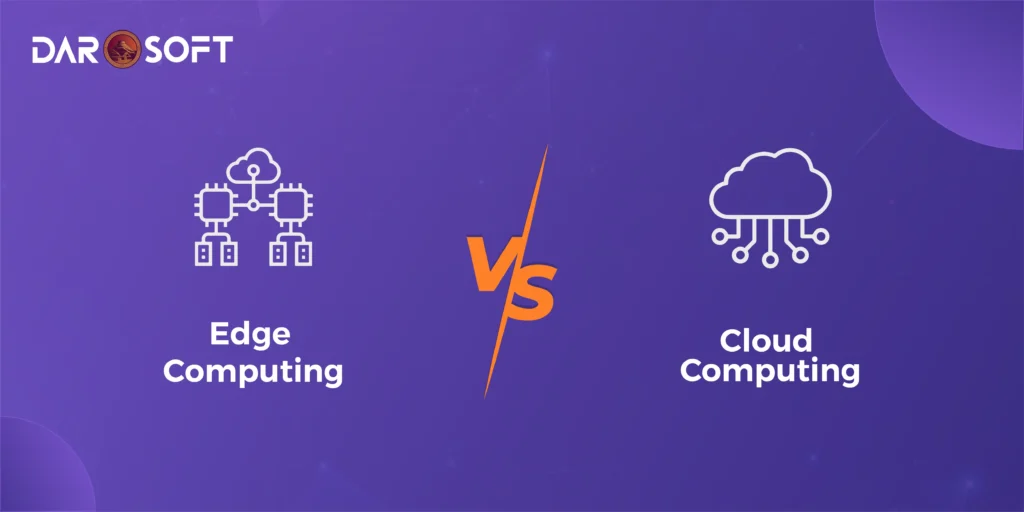
Edge computing doesn’t replace cloud computing. It complements it. Both play essential roles in modern IT architecture, but their strengths lie in different areas.
Here’s how they compare across key dimensions:
Factor | Cloud Computing | Edge Computing |
Location of Processing | Centralised in remote data centers. | Distributed and local, processing happens near or at the source of data generation. |
Latency | Higher due to long-distance data transmission. | Ultra-low; enables near real-time responses. |
Bandwidth Use | Heavy, since large amounts of raw data are transmitted to the cloud. | Lighter, as only necessary or summarised data is sent to the cloud. |
Scalability | Virtually unlimited, with on-demand resources from cloud providers. | Limited to the capacity of local devices, gateways, or micro data centers. |
Reliability | Dependent on stable internet connectivity. | Can operate even offline or with intermittent connectivity. |
Data Privacy & Compliance | Data stored and processed remotely; may raise sovereignty and security concerns. | Sensitive data can stay local, improving privacy and regulatory compliance. |
Best Use Cases | Large-scale storage, analytics, enterprise apps, AI training, SaaS platforms. | Real-time monitoring, IoT devices, autonomous systems, robotics, and industrial control. |
How They Work Together
Cloud excels at heavy lifting: large-scale analytics, global coordination, storage, and training advanced AI models.
Edge shines where speed, reliability, and local intelligence are critical: smart cities, industrial automation, or self-driving cars.
The future is a hybrid model, where edge handles immediate processing and the cloud manages long-term intelligence.
Where They Work Together (Not Compete)
It’s important to understand that edge and cloud computing are not rivals. Instead, they are complementary technologies that form a powerful hybrid ecosystem. Each addresses different challenges in data processing, and together they create a seamless balance between speed and scale.
Division of Roles
Edge Computing → Handles local, real-time tasks where immediate action is required. Data is processed at or near the source, ensuring ultra-low latency and system reliability.
Cloud Computing → Focuses on storing, aggregating, and analysing large-scale or historical data. It provides scalability and advanced analytics that edge devices alone cannot handle.
Example in Action: Autonomous Vehicles
At the Edge (in the car): Cameras, LiDAR, and sensors generate gigabytes of data every second. The onboard edge system processes this data instantly to make split-second safety decisions, like braking to avoid an obstacle.
In the Cloud: The car sends selected data (e.g., driving patterns, system performance, aggregated trip data) to the cloud. There, it is analysed for long-term improvements such as traffic flow predictions, software updates, or training better AI driving models.
Other Hybrid Use Cases
Healthcare: Wearables analyse vital signs locally for immediate alerts, while the cloud stores long-term patient data for deeper medical insights.
Smart Cities: Edge sensors control traffic lights in real time, while cloud platforms analyse city-wide traffic data to optimise infrastructure planning.
Manufacturing: Edge systems detect equipment anomalies on the factory floor, while cloud systems run predictive analytics across entire plants to reduce downtime.
Real-World Use Cases of Edge Computing
Edge computing is no longer just a futuristic concept. It is already transforming industries by bringing computation closer to where data is generated. Here are some of the most impactful applications across different sectors:
Healthcare: Real-Time Patient Monitoring
Wearable devices and smart medical equipment powered by edge computing can continuously monitor vital signs such as heart rate, oxygen levels, or glucose levels. Instead of sending all the raw data to the cloud, the device analyses it locally and triggers immediate alerts if it detects abnormalities, such as irregular heartbeats or sudden drops in oxygen. This enables faster emergency responses and improves patient outcomes while reducing unnecessary cloud traffic.
Manufacturing: Smart Factories
In Industry 4.0 environments, machines are embedded with sensors that monitor vibration, temperature, and performance. Edge systems process this data on the factory floor to detect faults, anomalies, or inefficiencies in real time. For example, a robotic arm in a production line can self-correct or shut down instantly if a defect is detected, preventing costly downtime and product recalls.
Retail: Personalised Customer Experiences
Modern retail stores are leveraging edge-powered devices such as smart cameras and in-store sensors to analyse shopper behaviour in real time. This allows them to adjust digital signage, recommend products, or optimise store layouts instantly. Imagine walking into a store where digital displays adapt to your preferences, or checkout lines are dynamically managed based on real-time crowd detection.
Smart Cities: Dynamic Traffic Management
Edge computing plays a central role in urban innovation. Smart traffic lights, powered by local sensors and edge AI, can adapt their signals dynamically based on current traffic conditions. Instead of waiting for cloud-based instructions, the system decides on the spot, reducing congestion, improving road safety, and cutting down emissions from idling vehicles.
Future Outlook of Edge Computing
Edge computing is still evolving, but its trajectory is clear: it’s becoming a cornerstone of the next digital revolution. Several major trends are shaping its future and accelerating adoption across industries.
5G as the Catalyst
The rollout of 5G networks is one of the biggest drivers of edge adoption. With ultra-low latency and high bandwidth, 5G makes it possible for billions of IoT devices to connect seamlessly and exchange data in real time. From autonomous vehicles to augmented reality (AR) applications, 5G ensures that edge computing can operate at its full potential.
AI at the Edge (Edge AI)
Artificial intelligence is moving closer to the data source. Instead of sending raw data to centralised servers for analysis, AI models are being deployed directly on edge devices—like cameras, drones, or wearables. This allows for intelligent decision-making on the spot, even without internet connectivity. For example, drones can inspect pipelines in remote areas and identify leaks instantly without relying on cloud communication.
Hybrid Edge-Cloud Architectures
The future is not about choosing between edge and cloud. It’s about combining both. Hybrid models are emerging as the standard, where edge handles local real-time processing, and the cloud manages large-scale storage, analytics, and long-term learning. This dual approach will enable businesses to get the best of both worlds: speed + scale.
Expanding Ecosystems and Use Cases
Healthcare → Remote surgeries powered by edge and 5G.
Retail → AI-driven in-store experiences personalised in milliseconds.
Smart Cities → Energy grids that self-balance and reduce waste.
Industrial IoT → Fully autonomous factories powered by predictive edge analytics.
Conclusion
Edge computing is not a replacement for cloud computing. It’s a complementary force. While the cloud remains essential for scalability, storage, and deep analytics, the edge brings speed, efficiency, and real-time decision-making right to the source of data.
Together, they form a hybrid ecosystem where businesses can harness the strengths of both: cloud for long-term insights and edge for instant responsiveness. As industries embrace IoT, AI, and 5G, this combination will become the backbone of next-generation digital infrastructure.