- Written by: Hummaid Naseer
- August 8, 2025
- Categories: Cloud Infrastructure
The post-pandemic acceleration of digital transformation pushed countless organisations to adopt cloud infrastructure at record speed. But with that growth came complexity, hybrid models, multi-cloud environments, and an ever-expanding attack surface.
As businesses rely more heavily on the cloud for everything from operations to innovation, cloud security is no longer just an IT concern. It’s a critical business priority. This article explores how cloud security is evolving in 2025 and what modern teams must do to stay ahead of threats.
The Shared Responsibility Model
Despite years of cloud adoption, one of the most persistent security misconceptions in 2025 remains the shared responsibility model. Many organisations still assume that moving to the cloud transfers full security ownership to the provider. The reality is more nuanced, and failing to understand it can lead to serious breaches.
What Cloud Providers Secure vs. What You Must Secure
Cloud providers like AWS, Azure, and Google Cloud secure the underlying infrastructure, the physical servers, networking, storage, and foundational services. However, you are responsible for securing:
Your data
Access controls and identity management
Application-layer vulnerabilities
Network configurations (e.g., firewalls, security groups)
Misuse of cloud-native services (e.g., storage buckets, databases)
This means if your S3 bucket is publicly exposed or your VM has an open port, that’s on you, not your provider.
Real-World Misconfigurations That Caused Breaches
Even in 2025, cloud misconfigurations remain one of the leading causes of data breaches. Some high-profile examples include:
Publicly exposed storage buckets are leaking millions of customer records.
Over-permissioned IAM roles allow lateral movement by attackers.
Lack of MFA on cloud accounts leads to credential-based attacks.
Un-patched containers are running outdated software due to poor CI/CD hygiene.
These incidents highlight that while cloud providers offer powerful security tools, they don’t configure or enforce them for you.
Zero Trust Architecture: Trust Nothing, Verify Everything
In a world of cloud-native applications, hybrid work forces, and relentless cyber threats, perimeter-based security is no longer effective. The traditional “castle-and-moat” model, where users and systems inside the network are trusted, has collapsed under the weight of cloud sprawl and remote access. That’s where Zero Trust Architecture (ZTA) comes in.
Why Perimeter-Based Security Is Dead
The modern enterprise no longer has a fixed perimeter. Employees log in from personal devices, access cloud apps from public Wi-Fi, and integrate APIs across third-party platforms. In this environment, attackers can exploit a single weak link to move laterally and cause major damage.
Assuming trust based on location or IP is no longer safe.
Breaches now come from within compromised credentials, insider threats, or mis configured cloud services. A Zero Trust model flips the paradigm: no user, device, or service is trusted by default, regardless of location.
Core Components of Zero Trust in the Cloud
Implementing Zero Trust in cloud environments involves continuous validation across multiple dimensions:
Identity Verification
Enforce strong identity and access management (IAM).
Use multi-factor authentication (MFA) for all access points.
Apply least privilege and just-in-time access policies.
Device Verification
Assess device posture before granting access (OS version, patch status, MDM compliance).
Block or restrict access from jail broken, outdated, or un managed devices.
Network Segmentation and Micro-Perimeters
Replace flat networks with micro-segmentation.
Use software-defined perimeters and dynamic access controls based on context.
Workload and Application Validation
Authenticate and authorise services before they talk to each other.
Monitor service-to-service communication for anomalies (via service mesh or eBPF observability).
Continuous Monitoring & Policy Enforcement
Log, inspect, and analyse every request.
Apply real-time policy enforcement using behavioural analytics and risk scores.
Zero Trust is not a product. It’s a philosophy. In cloud-native security for 2025, it’s about treating every request as hostile until proven otherwise, and validating every user, device, application, and network interaction every time.
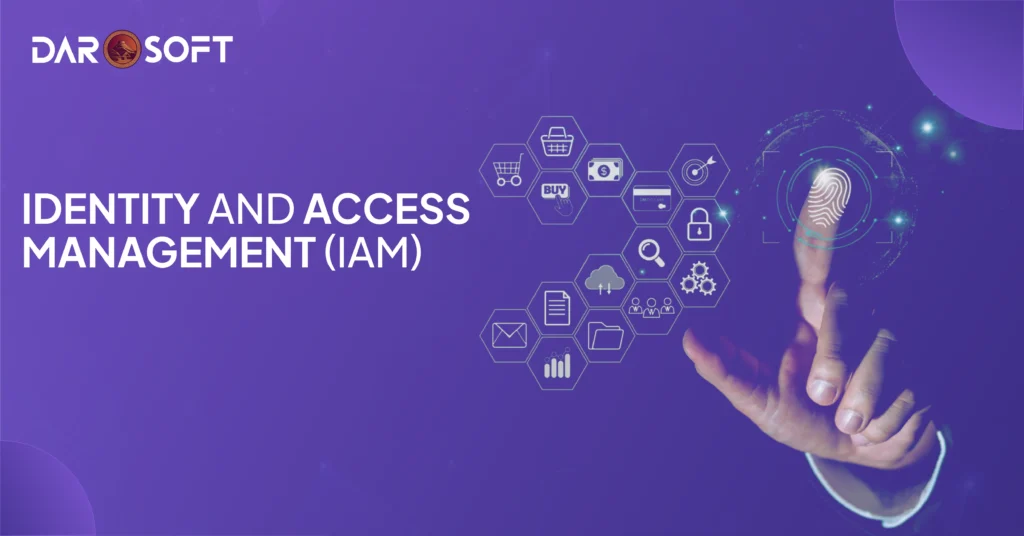
Users, services, and applications are constantly interacting across dynamic environments, and Identity and Access Management (IAM) plays a foundational role in security. If Zero Trust is the philosophy, IAM is one of its key enablers, ensuring the right people (and systems) have the right level of access to the right resources at the right time.
Enforce Least Privilege Access
The principle of least privilege (PoLP) means giving users and services only the permissions they need and nothing more. This dramatically reduces the blast radius of a breach if an identity is compromised.
Don’t grant admin access by default.
Separate duties across users and roles.
Use temporary, scoped access (e.g., time-bound roles in AWS IAM or GCP IAM Conditions).
Use Role-Based and Attribute-Based Access Control
Modern cloud platforms support more than simple role assignments:
Role-Based Access Control (RBAC): Assigns permissions based on job function (e.g., Developer, Auditor, Admin).
Attribute-Based Access Control (ABAC): Goes further, allowing access decisions based on user attributes (department, location) and context (time, IP address, resource tags).
By combining RBAC and ABAC, organizations can create fine-grained, context-aware access policies that scale across cloud environments.
Regularly Audit and Rotate Credentials & Keys
Stale or overexposed credentials are one of the most common causes of cloud breaches. Strengthen your IAM hygiene by:
Automating key and secret rotation (using tools like AWS Secrets Manager or HashiCorp Vault).
Removing unused identities, keys, and access tokens.
Enforce strong password policies and MFA across all access points.
Reviewing IAM logs and access patterns for anomalies or privilege creep.
Cloud Misconfiguration: The Silent Killer
While data breaches often grab headlines, one of the most frequent and preventable causes behind them is cloud misconfiguration. As cloud adoption accelerates, so does complexity. Unfortunately, that complexity often leads to dangerous oversights: unprotected resources, overly permissive access, and human error in critical configurations.
Common Pitfalls That Open the Door to Attackers
Even well-intentioned teams can make mistakes. Among the most common cloud misconfigurations are:
Publicly exposed S3 buckets or cloud storage blobs containing sensitive data like logs, user information, or source code.
Unrestricted firewall rules or open ports (e.g., 0.0.0.0/0 on SSH or RDP) that allow anyone on the internet to access internal systems.
Disable encryption at rest or in transit, leaving data vulnerable during storage or transmission.
Over-permissioned IAM roles or service accounts that violate the principle of least privilege.
Lack of multi-factor authentication (MFA) on administrative accounts.
Outdated security group rules and forgotten shadow environments (e.g., old test environments still running).
Even a single misconfigured setting can turn into a massive breach—quietly sitting until a bad actor finds it.
How to Prevent Misconfigurations at Scale
Modern cloud-native environments demand automation and enforcement. That’s where configuration management and policy-as-code tools come in:
Terraform with Sentinel or Open Policy Agent (OPA): Enforce policies at the provisioning stage, e.g., deny any infrastructure that lacks encryption or uses default passwords.
AWS Config, Azure Policy, or GCP Organization Policy: Continuously audit your environment against compliance rules. Get real-time alerts when something drifts from your security baseline.
Infrastructure as Code (IaC): Codify your infrastructure using Terraform, Pulumi, or CloudFormation, then scan it with tools like Checkov or tfsec before deployment.
Automated Remediation: Integrate security rules into your CI/CD pipeline to catch misconfigurations before they go live.
Encryption Is Non-Negotiable
a baseline requirement for any serious data security strategy. Whether you’re storing customer PII, financial records, or internal application logs, protecting that data at every stage of its lifecycle is critical to compliance, trust, and resilience.
Encrypt At Rest and In Transit
At rest: Ensure all data stored in databases, object storage (e.g., S3, Blob Storage), backups, and logs is encrypted. This guards against unauthorized access in case of a breach or misconfiguration.
In transit: Use TLS (Transport Layer Security) for all communications between services, APIs, and users. Never send data unencrypted over the wire—whether it’s internal traffic or public endpoints.
Use Key Management Systems (KMS)
Cloud-native KMS solutions (like AWS KMS, Azure Key Vault, Google Cloud KMS) make it easier to manage and rotate keys securely.
For greater control, consider customer-managed keys (CMKs), especially when dealing with regulatory compliance or sensitive workloads. These give you ownership over key rotation, revocation, and usage policies.
Classify, Tokenize, and Minimize
Data classification: Not all data needs the same level of protection. Categorize data by sensitivity (e.g., public, internal, confidential, restricted) to apply appropriate security controls.
Tokenization: Replace sensitive data elements (like credit card numbers or Social Security numbers) with non-sensitive placeholders that retain usability without exposure.
Minimize retention: Store only what’s necessary, and for only as long as needed. Reducing your data footprint reduces your risk surface.
Threat Detection & Response
Modern cloud environments generate massive volumes of logs and telemetry, but logging alone isn’t enough. In 2025, proactive cloud security depends on turning logs into actionable intelligence and responding in real time to anomalies, misbehavior, and emerging threats.
Integrate SIEMs and Cloud-Native Security Tools
SIEM platforms like Splunk, Google Chronicle, and Microsoft Sentinel centralize and correlate logs across multi-cloud environments to detect suspicious patterns.
Use cloud service provider (CSP)-native tools:
AWS GuardDuty for intelligent threat detection
Azure Defender for workload and identity protection
GCP Security Command Center for asset monitoring and findings
These tools offer tight integration with your cloud stack and support real-time alerting and auto-remediation.
Leverage Behavior Analytics & Auto-Response
UEBA (User and Entity Behavior Analytics) helps identify abnormal behavior from users, applications, or devices—catching threats that signature-based tools miss.
Anomaly detection powered by machine learning can flag unusual spikes in access, API usage, or data transfer volumes.
Automated incident response (e.g., with AWS Lambda or Azure Logic Apps) can isolate a compromised workload, revoke credentials, or notify SOCs instantly, reducing dwell time and damage.
Test Your Defenses with Red Teaming and Pen Tests
Regular penetration testing of your cloud architecture reveals weaknesses in IAM, misconfigurations, and open exposure.
Red team simulations stress-test your detection and response capabilities, helping you refine playbooks, alert thresholds, and containment workflows.
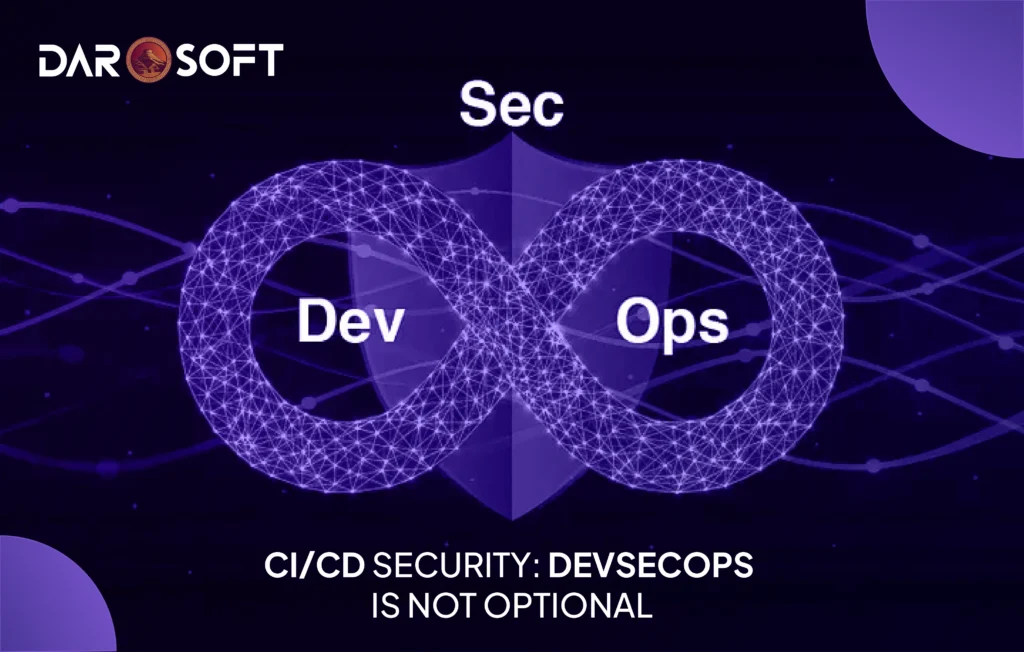
CI/CD pipelines, while essential for fast deployment, are increasingly being exploited as entry points for attackers. DevSecOps, the practice of integrating security at every stage of the development lifecycle, is no longer a nice-to-have. It’s essential for safe, scalable, and resilient software delivery.
Shift Left: Security Starts in the Pipeline
Embed automated security checks directly into your CI/CD workflows:
SAST (Static Application Security Testing): Scan code for vulnerabilities early using tools like SonarQube, CodeQL, or Semgrep.
DAST (Dynamic Application Security Testing): Simulate attacks against running apps during staging or testing (e.g., OWASP ZAP, Burp Suite).
IaC Scanning: Tools like Checkov, tfsec, or Bridgecrew ensure Terraform, CloudFormation, and Kubernetes manifests don’t expose misconfigurations.
Scan Everything: Images, Artifacts, and Dependencies
Container image scanning detects known CVEs in base OS packages and application layers. Use tools like Trivy, Clair, or Docker Scout.
Dependency checks (e.g., via OWASP Dependency-Check, Snyk, or Dependabot) identify outdated or insecure third-party libraries.
Scan artifacts before they’re deployed, not just after—the earlier you catch it, the cheaper it is to fix.
Secure Secrets Management in Pipelines
Hard coding secrets or passing API keys in plaintext is a major risk.
Use secret managers like HashiCorp Vault, AWS Secrets Manager, or Azure Key Vault.
Implement runtime secret injection into build jobs—never store secrets directly in your Git repo or CI environment variables.
Monitor for secret leaks with tools like GitGuardian or gitleaks.
Secure by Design, Secure by Default
DevSecOps isn’t a tool—it’s a mindset. It requires:
Policy as code to enforce secure practices at scale.
Automated compliance checks tied to builds and deployments.
Cross-functional collaboration among developers, security, and operations.
Complexity Breeds Vulnerability
As organisations increasingly adopt multi-cloud and hybrid cloud strategies to optimise performance, avoid vendor lock-in, and support diverse workloads, the security landscape becomes exponentially more complex. With that complexity comes risk; misaligned controls, visibility gaps, and fragmented identity systems can all open doors to potential breaches.
Unified Visibility Across Cloud Platforms
Security teams must gain centralised insights into assets, configurations, and activity, regardless of where they reside.
Use Cloud Security Posture Management (CSPM) tools like Prisma Cloud, Wiz, or Microsoft Defender for Cloud to monitor and remediate risks across AWS, Azure, GCP, and on-prem environments.
Standardise logging and telemetry with SIEM integrations (e.g., Splunk, Chronicle, Elastic Security) to avoid blind spots.
Leverage OpenTelemetry for consistent observability across distributed services.
Cross-Cloud Identity Federation
Managing access in a multi-cloud environment is risky without a unified identity strategy.
Implement federated identity providers (e.g., Okta, Azure AD, Ping Identity) to enforce consistent access control across providers.
Adopt SSO and SAML/OIDC standards to streamline authentication and reduce credential sprawl.
Apply least privilege principles using role-based access (RBAC) or attribute-based access (ABAC) policies in each cloud provider.
Secure APIs and Inter-Cloud Communication
Hybrid and multi-cloud setups often involve inter-service communication via APIs, which need rigorous security controls.
Use mutual TLS (mTLS), API gateways, and service meshes (like Istio, Linkerd) to secure internal communication.
Encrypt data in transit and use token-based authentication (e.g., JWTs, OAuth2) for inter-cloud API calls.
Monitor for API abuse or anomalies with API security platforms like Salt Security or Noname Security.
Stay Ahead of Regulations
The pace of regulatory change is accelerating. With global privacy laws evolving and industry standards tightening, manual compliance efforts simply can’t keep up. That’s where compliance automation steps in, not just to reduce overhead, but to build trust and resilience into your cloud operations from day one.
Continuous Compliance as Code
Treating compliance like infrastructure, with code, brings predictability and repeatability to security controls.
Use policy-as-code frameworks (e.g., Open Policy Agent, HashiCorp Sentinel) to enforce rules across cloud deployments automatically.
Define guardrails as version-controlled code and integrate them into CI/CD pipelines for real-time enforcement.
Embed checks for misconfigurations, data residency, or access violations before code is merged or deployed.
Align With Leading Standards and Regional Mandates
Whether you’re handling healthcare records in the U.S., personal data in the EU, or financial systems globally, automated compliance tooling helps map controls across:
GDPR (data privacy and subject rights)
SOC 2 (security, availability, confidentiality, etc.)
ISO 27001 (information security management)
HIPAA (U.S. health data protection)
Local laws like CCPA, NIS2, PDPA, and others
Frameworks like AWS Artifact, Azure Compliance Manager, or third-party platforms like Drata, Vanta, or AuditBoard make this mapping seamless.
Automate Evidence Collection and Audit Trails
Security audits don’t have to be painful when evidence is collected continuously and logs are always ready for audit.
Use event logging and change tracking tools (e.g., AWS CloudTrail, Azure Monitor) to maintain a provable audit trail.
Automate the generation of compliance reports, access reviews, and risk assessments.
Get alerts and dashboards showing real-time posture against required controls, so you’re always audit-ready, not scrambling at the last minute.
Conclusion
To stay resilient, your cloud security strategy must be dynamic, proactive, and people-centric. That means:
Continuously auditing and improving configurations
Embedding security in every stage of the development life cycle
Keeping your teams educated and your tools up-to-date
Prioritising visibility, automation, and cross-team collaboration
Cloud security isn’t a checklist to complete. It’s a mindset to adopt. By embracing continuous improvement and treating security as an integral part of product and infrastructure design, your organisation can stay ahead of threats and build with confidence in an ever-changing digital landscape.