- Written by: Hummaid Naseer
- August 1, 2025
- Categories: API and Framework
Start with the big picture. Why API design isn’t just a backend concern anymore. Emphasize how modern applications (especially SPAs, mobile apps, and microservices) demand faster, more flexible, and more collaborative APIs than REST alone can often deliver.
For years, RESTful APIs were the dominant standard, simple, resource-based, and built on top of familiar HTTP protocols. REST brought structure and predictability to API design. But as frontend frameworks advanced, user expectations rose, and microservices exploded, REST began to show its limitations.
Modern developers need more than rigid endpoints; they need precision, flexibility, and control over the data they request. They want to reduce over-fetching and under-fetching, optimize performance for slow mobile networks, and iterate quickly without waiting on backend changes.
This shift has given rise to GraphQL, a new way of thinking about data queries, where the client defines the structure, and the server responds accordingly. It’s not just a new tool. It’s a response to a new era of software that prioritizes velocity, customization, and collaborative development.
Why REST Became the Standard
Before REST, web services were often built using heavyweight protocols like SOAP, which relied on XML, strict schemas, and complex message formats. These systems were hard to work with, difficult to scale, and poorly suited to the emerging world of mobile apps and single-page applications.
Then came REST, short for Representational State Transfer, a concept formalized by Roy Fielding in his 2000 doctoral dissertation. REST brought a simpler, more intuitive model to web APIs by embracing the existing architecture of the web itself.
Why REST Took Off
REST’s appeal lies in its clarity and simplicity:
Statelessness
Every request contains all the information needed to process it. The server doesn’t store session state, making systems easier to scale and cache.Predictable Resource URLs
Data was accessed through logical, noun-based endpoints:
/users/123, /orders/567/items, etc.
These URLs mirrored the structure of resources in the system, making them easy to understand and document.Standard HTTP Methods (Verbs)
REST used the built-in vocabulary of HTTP:GET to fetch data
POST to create
PUT/PATCH to update
DELETE to remove
This allowed clients and servers to interact cleanly using the same protocol that powers the entire web.
The Impact
REST quickly became the default API design pattern for web and mobile apps. It enabled decoupled client-server architectures, empowered frontend teams to move faster, and standardized how applications exchanged data across the internet.
From startups to enterprises, REST APIs power everything from shopping carts and user profiles to payment systems and push notifications. It brought order to the chaos of custom interfaces and paved the way for the API economy we see today.
The Limitations of REST in a Modern Dev Environment
While REST brought consistency and scalability to early web APIs, today’s complex, real-time, and multi-platform applications have exposed critical shortcomings in the model. Here’s where REST starts to feel like a constraint rather than a convenience:
Over-Fetching & Under-Fetching
REST’s rigid resource-based endpoints often force clients to:
Over-fetch: Get more data than needed (GET /users returns full profiles when only names are required).
Under-fetch: Make multiple round-trips to assemble a complete UI (e.g., fetching users, then fetching each user’s posts separately).
This increases latency and server load, especially painful on mobile or poor network connections.
API Versioning Headaches
When frontend requirements change, REST APIs often need new versions (/v1/users, /v2/users) to preserve backward compatibility.
This leads to:
Duplicated code and logic
Confusion over which version to use
Slower iteration cycles for both frontend and backend teams
Scaling for Mobile and Multi-Client Environments
Modern apps must serve mobile, web, smartwatch, and third-party integrations, each with different data needs.
REST treats all consumers equally, leading to one-size-fits-all responses or bloated endpoints with optional fields and flags.
Developers often resort to:
Creating redundant endpoints for different clients
Adding logic in clients to trim unnecessary data
Manually managing request chaining
Frontend–Backend Friction Over Rigid Payloads
Frontend teams often need fast changes to data structure or field availability. But in REST:
The backend dictates the shape of responses
Any change needs backend intervention
Misalignment slows delivery and causes rework
This tight coupling leads to slower feedback loops, heavier reliance on backend updates, and a growing disconnect between what users need and what APIs deliver.
TL;DR
Pain Point | REST Struggles With |
Data flexibility | Fixed schemas and static responses |
Client-specific needs | Duplicate or bloated endpoints |
Developer velocity | Tight frontend-backend dependency |
Maintainability | Complex versioning and patch logic |
GraphQL: What It Is and How It Differs from REST
As modern applications demanded more flexibility, speed, and control, Facebook developed a new way to handle data fetching: GraphQL. Released as an open standard in 2015, GraphQL re-imagines how clients and servers communicate, shifting from server-driven to client-defined APIs.
What Is GraphQL?
GraphQL is a declarative query language and runtime for APIs.
Instead of calling different endpoints for different resources (like in REST), GraphQL allows clients to ask for exactly the data they need, in one request, from a single endpoint.
Key Differences from REST
Feature | REST | GraphQL |
Endpoint Structure | Multiple endpoints per resource | One unified /graphql endpoint |
Data Shape | Fixed by the server | Defined by client queries |
Over/Under-Fetching | Common | Avoided entirely |
Nested/Related Data | Multiple requests needed | One query with nested fields |
Versioning | Manual (/v1, /v2, etc.) | No versioning—schema evolves |
Query Language | URL + query params | Structured, type-safe query DSL |
A Simple Comparison
REST call to fetch a user and their posts:
http
GET /users/123
GET /users/123/posts
GraphQL equivalent:
Graphql
query {
user(id: “123”) {
name
posts {
title
published
}
}
}
One call
Exactly what the UI needs
In one round trip
Why This Matters
Front-end teams move faster without waiting for backend changes.
Mobile apps can optimise payloads for bandwidth and battery.
Back-ends can expose complex systems (like micro-services) as a unified graph of data.
When to Use REST and When GraphQL Shines
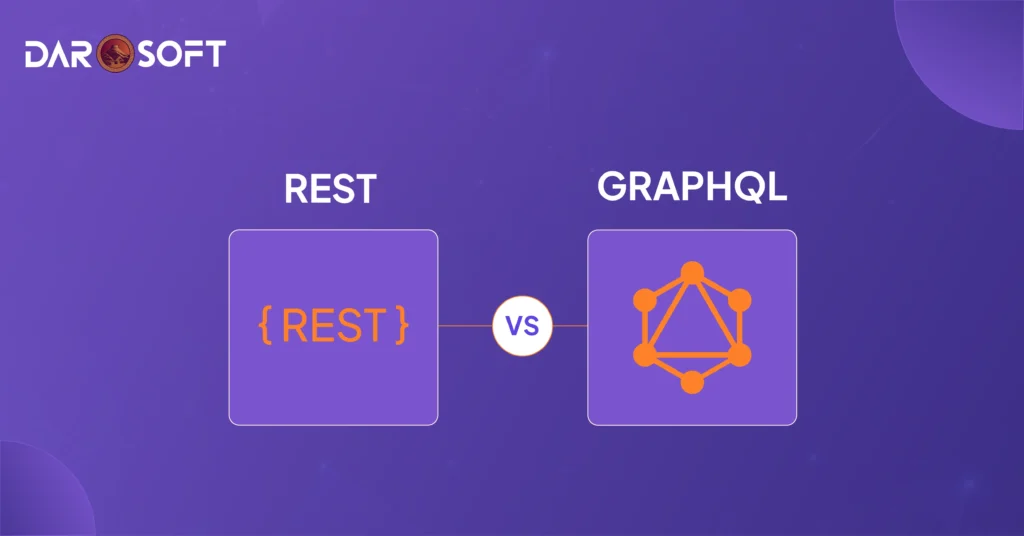
REST and GraphQL aren’t rivals. They’re tools with different strengths. Choosing the right one depends on your application’s complexity, performance goals, and how your teams collaborate. Here’s a clear breakdown to help guide your decision:
When REST Still Makes Sense
REST remains a great choice for applications with predictable, resource-centric interactions and strong caching requirements.
Ideal Use Cases:
Standard CRUD operations (Create, Read, Update, Delete)
If you’re building a basic backend for data entry or admin dashboards, REST is straightforward and easy to maintain.Public APIs with CDN support
REST works well with HTTP caching and can be accelerated through edge networks like Cloudflare or Akamai.Simple, decoupled services
Microservices that serve isolated resources (e.g., an image server, product catalog, or weather API) are great REST candidates.Low frontend customization needs
If all clients (web, mobile, etc.) consume the same structure, REST’s rigidity isn’t a bottleneck.
When GraphQL Shines Brightest
GraphQL thrives in dynamic, data-rich applications. Especially when client needs evolve rapidly, and data relationships are complex.
Ideal Use Cases:
Client-heavy apps (React, Vue, mobile, SPAs)
GraphQL lets frontend teams shape responses to match UI needs—no over-fetching, no waiting for new endpoints.Real-time or interactive apps
With built-in support for subscriptions, GraphQL can push live updates (e.g., notifications, chats, dashboards) over WebSockets.Complex nested data
If your UI needs deeply linked resources (users → posts → comments → likes), GraphQL lets you fetch it all in one clean query.Rapid iteration & tight team collaboration
GraphQL’s self-documenting schema and client-driven nature reduce frontend/backend friction, allowing teams to iterate in parallel.Unified data access across microservices
With tools like Apollo Federation, you can expose multiple services as a single graph, ideal for large teams and complex systems.
Summary Table
Use Case | REST | GraphQL |
Simple CRUD | Yes | No |
Public API with CDN caching | Yes | No |
Complex UI with nested data | No | Yes |
Real-time subscriptions | No | Yes |
Multiple clients with different needs | No | Yes |
Rapid frontend iteration | No | Yes |
GraphQL in Action: Ecosystem and Tooling
One of the reasons GraphQL adoption has soared is the strength of its ecosystem. Over the years, a wide range of powerful tools and frameworks have emerged, making it easier than ever to build, scale, and maintain GraphQL-powered applications.
Here’s a look at some of the most popular and production-ready GraphQL tooling across the stack:
Apollo Client & Apollo Server
Apollo is the de facto standard in GraphQL tooling.
Apollo Server: A robust, open-source GraphQL server that supports schema stitching, subscriptions, authentication hooks, and integrates well with Express, Fastify, and more.
Apollo Client: A powerful GraphQL client for React, Vue, and Angular. Handles:
Caching
Query deduplication
Local state management
Error handling and loading states
Apollo enables end-to-end GraphQL development with seamless frontend-backend integration.
GraphQL Code Generator (GraphQL Codegen)
This tool automates the generation of fully typed query hooks, resolvers, and TypeScript interfaces based on your schema and queries.
Supports React, Vue, Next.js, and more
Eliminates manual typing
Keeps your codebase in sync with your schema
Perfect for strongly-typed, auto-documented GraphQL development workflows.
Prisma
Prisma isn’t a GraphQL tool directly, but it complements GraphQL APIs extremely well as a next-gen ORM (Object-Relational Mapper).
Connects to PostgreSQL, MySQL, MongoDB, and SQLite
Exposes a type-safe, auto-generated database client
Works beautifully with GraphQL resolvers
Ideal for building GraphQL + SQL stacks with high performance and DX.
Caching and Performance: Relay & Apollo
Apollo Client Cache: In-memory normalised cache that makes repeated queries instantaneous and allows optimistic UI updates.
Relay: Facebook’s battle-tested GraphQL client optimised for large-scale applications. Features:
Fragment-based co-location
Fine-grained query composition
Excellent cache invalidation strategies
If Apollo is about ease and flexibility, Relay is about performance at scale.
GraphQL + TypeScript + React = Developer Delight
Modern GraphQL tooling embraces strong typing and frontend agility:
Codegen + Apollo or Relay = fully typed queries and components
Tools like urql, graphql-request, and react-query with GraphQL support give flexibility for different app sizes
Native TypeScript integration makes building and maintaining apps safer and faster
Bonus Tools
Tool | Purpose |
GraphiQL / GraphQL Playground | Interactive API explorers |
GraphQL Voyager | Visualise your GraphQL schema as a graph |
Apollo Studio | Schema insights, query tracking, performance metrics |
Hasura | Instant GraphQL API on top of Postgres with auth, permissions, and subscriptions built-in |
Challenges with GraphQL (Yes, There Are Some)
GraphQL introduces powerful capabilities, but it’s not without its trade-offs. As with any architectural decision, adopting GraphQL means navigating a new set of complexities that don’t always appear in traditional REST environments.
Here are the key challenges to be aware of:
1. Caching Is Harder Than with REST
With REST, caching is simple and effective thanks to predictable URLs and HTTP methods. Tools like CDNs and reverse proxies (e.g., Varnish, Cloudflare) work out of the box with RESTful GET requests.
GraphQL, however:
Uses a single endpoint, making URL-based caching ineffective.
Requires response normalisation and field-level caching, which can be complex to implement.
Depends heavily on custom client-side caching (e.g., Apollo, Relay), which needs schema awareness and consistent query structures.
Workaround: Use Apollo Client’s normalised cache or tools like GraphQL Persisted Queries to improve caching performance.
2. Overly Complex Queries Can Hurt Performance
GraphQL empowers clients to ask for exactly what they want, but that flexibility can backfire.
Deeply nested queries can lead to N+1 problems if resolvers aren’t optimised.
Malicious or careless clients can query large graphs, causing backend strain or timeouts.
Without proper limits, performance bottlenecks are easy to introduce.
Solution: Use query complexity analysis, depth limiting, and dataloader for batching and caching resolvers.
3. Requires Strong Schema Governance
The schema is the heart of a GraphQL API, and keeping it clean, consistent, and backward-compatible is essential.
Large teams must coordinate schema changes carefully.
It’s easy to clutter the schema with overly specific types or fields tailored to one use case.
Without proper tooling, schema drift and technical debt can grow quickly.
Tools like Apollo Studio, GraphQL Inspector, and schema registries help track, document, and manage schema changes.
4. Learning Curve for REST-First Developers
GraphQL flips many REST assumptions:
No standard verbs (GET, POST)
No concept of resources—only fields and types
Queries and mutations, not endpoints
This new mental model requires:
Learning the GraphQL syntax and schema definition language (SDL)
Understanding resolvers, type safety, and query composition
Adopting new tooling (GraphiQL, Apollo, etc.)
GraphQL isn’t just a new API. It’s a new way of thinking about data.
Conclusion
REST has been and continues to be a reliable standard for building APIs. It’s simple, predictable, and excels at delivering resource-based data in stable, cache-friendly environments. For many use cases, REST is still the right choice.
But modern software demands more.
As applications become more dynamic, frontend-driven, and multi-platform, the limitations of REST rigid endpoints, versioning friction, and over-under-fetching start to show. That’s where GraphQL enters the scene: not as a replacement, but as a next-generation solution for modern data needs.
GraphQL empowers teams to:
Fetch exactly the data they need
Iterate quickly without backend bottlenecks
Handle complex, nested data in one elegant query
It’s not without its challenges; caching, complexity, and schema management require care, but for client-heavy apps, real-time systems, and fast-moving teams, GraphQL unlocks a level of flexibility and collaboration that REST was never designed to support.