Before diving into specific tools, it’s important to understand what a “tech stack” truly means and how it shapes your development strategy. A tech stack refers to the combination of technologies, like programming languages, frameworks, databases, and tools, used to build and run your software application. It’s the foundation of your digital product. Choosing the right tech stack early on is crucial because it directly affects your product’s performance, scalability, development speed, and future maintenance.
The right stack empowers your team to build efficiently and adapt as your needs evolve, while the wrong one can lead to costly rework, delays, and technical limitations. For startups and growing businesses, making informed tech stack decisions early can be the difference between smooth scaling and major roadblocks down the line.
Let’s explore the building blocks of a tech stack to understand how different layers work together.
What Is a Tech Stack?
A tech stack is the set of technologies used to build and run a software application. It includes the frontend (user interface, e.g., React, Vue), backend (server logic, e.g., Node.js, Python), database (data storage, e.g., MySQL, MongoDB), and infrastructure (hosting and deployment, e.g., AWS, Docker, Kubernetes).
Common tech stack examples include:
- MERN: MongoDB, Express.js, React, Node.js
- MEAN: MongoDB, Express.js, Angular, Node.js
- LAMP: Linux, Apache, MySQL, PHP
Each stack has its strengths and is suited to different types of projects, which is why selecting the right one based on your goals and team expertise is essential.
Key Factors to Consider
Here are the key factors to consider when choosing a tech stack:
- Project Type
The nature of your product, whether it’s a web app, mobile app, SaaS platform, or internal tool, will influence the technologies best suited for it. For example, mobile apps may require native development (Swift, Kotlin) or cross-platform solutions like React Native or Flutter. - Scalability Needs
Consider how much you expect your product to grow. If you anticipate handling large volumes of data or users, choose technologies that scale efficiently, such as Node.js or cloud-native infrastructure like AWS or Kubernetes. - Time to Market
If speed is a priority, go for stacks that enable rapid development and prototyping, like using pre-built components or frameworks with strong community support (e.g., MERN for web apps). - Budget and Resources
Some stacks may have higher development or maintenance costs due to licensing, hosting, or the availability of skilled developers. Open-source technologies are often more cost-effective. - Team Expertise
The skills and experience of your development team are crucial. Leveraging a stack your team is already familiar with can reduce learning curves, speed up development, and lower risk.
Frontend Technologies
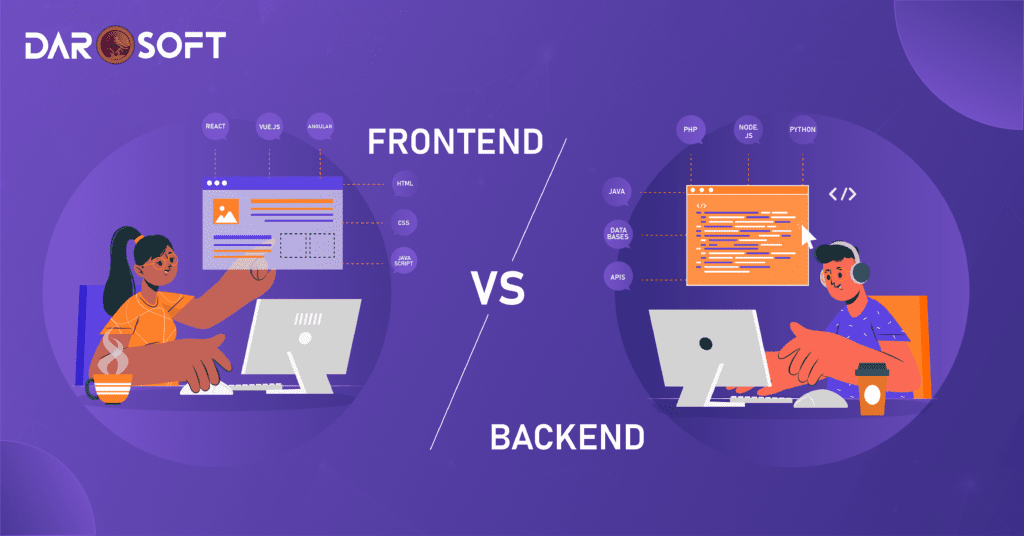
When selecting frontend technologies, it’s essential to consider frameworks that offer the right balance of performance, scalability, and developer productivity. Popular choices include:
- React: A widely used JavaScript library developed by Facebook. It’s known for its component-based architecture, strong community, and flexibility. Ideal for building dynamic, high-performance user interfaces.
- Vue.js: A progressive JavaScript framework that’s beginner-friendly yet powerful. Vue is great for quick development and has a growing ecosystem.
- Angular: A full-featured framework by Google, offering strong tooling and structure for large-scale applications. Best suited for enterprise-grade projects.
These technologies form the presentation layer of your product and directly impact the user experience. When choosing a frontend framework, look at factors like:
- Performance: How efficiently the framework renders and updates the UI.
- Community Support: Active communities ensure better documentation, frequent updates, and available plugins or tools.
- Ease of Use: The learning curve, especially for your development team, affects how quickly you can build and iterate.
Choosing the right frontend stack ensures a smooth user experience and faster, more maintainable development.
Backend Technologies
The backend powers the core functionality of your application, managing data, logic, and server-side operations invisible to users but crucial to the product’s performance.
1. Popular Backend Languages and Their Strengths:
- Node.js – A fast, event-driven JavaScript runtime ideal for real-time apps, APIs, and microservices. Works seamlessly with JavaScript frontends like React or Vue.
- Python – Known for its simplicity and versatility. Widely used in web apps (with frameworks like Django and Flask), as well as AI and data science projects.
- Java – A robust, enterprise-grade language used in large-scale systems. Frameworks like Spring make it scalable and reliable for complex applications.
- PHP – A mature language often used with content management systems (like WordPress) or backend frameworks like Laravel. Good for rapid development.
- Ruby – Paired with the Ruby on Rails framework, it offers developer-friendly syntax and rapid prototyping capabilities.
2. Frameworks & Ecosystem:
Frameworks provide reusable code, security features, and standardized structures, speeding up development. For example:
- Express.js for Node.js
- Django or Flask for Python
- Spring Boot for Java
- Laravel for PHP
- Ruby on Rails for Ruby
Databases and Data Storage
Choosing the right database is critical to how your application stores, retrieves, and manages data. The two main types are relational databases (SQL) and non-relational databases (NoSQL), each serving different purposes based on the structure and nature of your data.
1. Relational Databases (SQL)
These use structured schemas and tables to manage data with defined relationships.
- Examples:
- PostgreSQL – Powerful, open-source, and great for complex queries and data integrity.
- MySQL – Widely used, especially for web apps; known for speed and reliability.
- Best For:
Applications with structured data, such as e-commerce platforms, CRMs, or systems with complex relationships (e.g., products and users).
2. NoSQL Databases
Designed for flexibility and scalability, these are schema-less and work well with unstructured or rapidly changing data.
- Examples:
- MongoDB – Document-oriented and ideal for JSON-like data.
- Firebase Realtime Database / Firestore – Great for real-time apps and mobile-first development.
- Best For:
Projects that require scalability, speed, and handle dynamic or hierarchical data (e.g., chat apps, content platforms, IoT).
3. Use-Case-Driven Selection
The right database often depends on your app’s structure, scalability needs, and data consistency requirements. In some cases, using a polyglot persistence approach (a mix of SQL and NoSQL) can offer the best of both worlds. Once your application logic and data storage are defined, the next key consideration is how you deploy and manage it at scale. This is where infrastructure and DevOps come into play.
Infrastructure and DevOps
Your application’s infrastructure is the foundation for how it’s deployed, scaled, and maintained. Modern DevOps practices and cloud services enable faster development, smoother deployments, and greater reliability.
1. Cloud Platforms
Cloud providers offer scalable, on-demand infrastructure with integrated tools for storage, networking, databases, and computing.
- AWS (Amazon Web Services) – The most widely used cloud platform with a vast range of services. Ideal for enterprises and complex architectures.
- Microsoft Azure – Popular with businesses using Microsoft tools and services. Great for hybrid cloud setups.
- Google Cloud Platform (GCP) – Known for data analytics and AI tools; strong Kubernetes support.
Each platform supports auto-scaling, monitoring, and flexible pricing, making them suitable for startups and enterprises alike.
2. CI/CD Tools (Continuous Integration/Deployment)
These tools automate testing, building, and deployment, reducing manual errors and speeding up release cycles.
- GitHub Actions, GitLab CI, Jenkins, and CircleCI are widely used to ensure seamless integration and delivery workflows.
Containerization & Orchestration
Containers make your application portable and consistent across environments.
- Docker – Packages applications with all dependencies into containers for reliable deployment.
- Kubernetes – Orchestrates containers at scale, managing things like load balancing, service discovery, and self-healing.
By leveraging cloud infrastructure and DevOps tools, you can achieve a more resilient, scalable, and agile development pipeline.
Tech Stack Recommendations
Choosing the right tech stack depends heavily on your startup’s focus. Here’s a breakdown of recommended stacks based on common startup types:
1. MVPs and Prototypes
Goal: Build fast, test early, stay lean
- Frontend: React, Vue.js
- Backend: Node.js with Express, or Python with Flask
- Database: Firebase (for quick setup), or MongoDB
- Hosting/Infra: Vercel, Heroku, or Firebase Hosting
- Why: Quick deployment, minimal setup, great for rapid iterations
2. SaaS Startups
Goal: Scalable, secure, multi-tenant architecture
- Frontend: React or Angular
- Backend: Node.js with NestJS or Python with Django
- Database: PostgreSQL or MySQL (for structured multi-tenant data)
- Infrastructure: AWS or GCP, Docker, CI/CD with GitHub Actions
- Why: Supports API-first approach, clean architecture, and scalability
3. E-commerce Platforms
Goal: Performance, integrations, payment systems
- Frontend: Next.js (React framework), Vue with Nuxt.js
- Backend: Node.js or PHP with Laravel
- Database: MySQL or PostgreSQL
- Infra & Tools: Stripe API, AWS (S3, CloudFront), Shopify API if hybrid
- Why: SEO-friendly, secure, and integrates well with payment gateways
4. Mobile-First Startups
Goal: Cross-platform reach with fast development
- Frontend: React Native or Flutter
- Backend: Firebase, or Node.js with Express
- Database: Firebase Firestore or MongoDB
- Infra: Google Cloud or Firebase Hosting
- Why: Shared codebase across iOS and Android, real-time sync, push notifications
Common Mistakes to Avoid
- Overengineering early-stage products: Adding unnecessary complexity can slow down development and increase costs before product-market fit is validated.
- Choosing based on hype, not needs: Popular technologies aren’t always the right fit. Decisions should be based on your project’s specific goals, team skills, and long-term vision.
- Ignoring long-term scalability: A stack that works for a small MVP may struggle under heavy user loads later. Plan with future growth in mind to avoid costly rebuilds.
- Neglecting developer availability and support: Choosing a niche or outdated technology can make it hard to find skilled developers or community support, slowing down future development.
- Overlooking integration needs: Failing to consider how your stack will connect with third-party tools, APIs, or legacy systems can lead to costly workarounds or tech debt later.
Conclusion
Choosing the right tech stack is more than a technical decision; it’s a strategic one that shapes how efficiently and effectively your product is built, scaled, and maintained. From understanding your project goals to assessing scalability, budget, and developer resources, each factor plays a role in selecting the best tools for the job. Avoiding common pitfalls and aligning your tech with your long-term vision can save significant time and cost.